Marie Mulcahy Bsc Hons Western Herbal Medicine
Marie Mulcahy l BSc Hons Western Herbal Medicine | NIMH Registered | Online Consultations UK-Wide
You've been told everything looks "normal"...
But you still don't feel like yourself.
Perhaps your periods have changed.
You're exhausted no matter how much you sleep.
Your skin suddenly isn't behaving the way it used to.
You've been told you have PMOS (formerly PCOS), you're navigating perimenopause, or you simply know something isn't quite right even if your blood tests have come back "normal."
If you're tired of joining the dots on your own, you're in the right place.
I help women make sense of complex hormone symptoms through evidence-based herbal medicine and deeply personalised care.
Because your body isn't working against you.
It's communicating with you.
And together, we'll take the time to understand what it's trying to say.
Discover my approach -
You know your body.....
You know when something feels different
Maybe you've been told it's stress.
Or ageing.
Or that your results are "within normal range."
Yet you still don't have the energy you used to.
Your periods have changed.
Your digestion feels unpredictable.
Your sleep doesn't refresh you
Or perhaps you've been quietly wondering if this is simply something you have to accept.
I don't believe you should have to settle for uncertainty.
One of the things I hear most often from women when they first arrive is,
"I finally feel like someone is listening."
That matters.
Because before we talk about herbs...
Before we talk about treatment...
We begin with your story.

A different approach to hormone health
Hormones don't exist in isolation.
Neither do the women living with them.
That's why I don't focus on one symptom or one diagnosis.
Instead, we look at the bigger picture.
Together we'll explore how different systems in your body may be influencing one another, including:
Hormones and menstrual health
PMOS (formerly PCOS)
Perimenopause and menopause
Thyroid health
Digestive health and the gut microbiome
Stress and nervous system regulation
Sleep, energy and resilience
Nutrition and metabolic health
Because understanding why something is happening is often the first step towards meaningful change.
What's it like to work with me? 🌿
🌿 No two women walk into my clinic with exactly the same story.
So no two treatment plans are ever the same.
Every consultation is designed to help you:
🌿 Feel heard—not rushed.
🌿 Understand what's happening in your body.
🌿 Receive an individualised plan based on your health history, symptoms and goals.
🌿 Feel confident about the next steps in your hormone journey.
This isn't about chasing quick fixes or the latest wellness trend.
It's about thoughtful, evidence-based care that's tailored to you.
Hello, I’m Marie
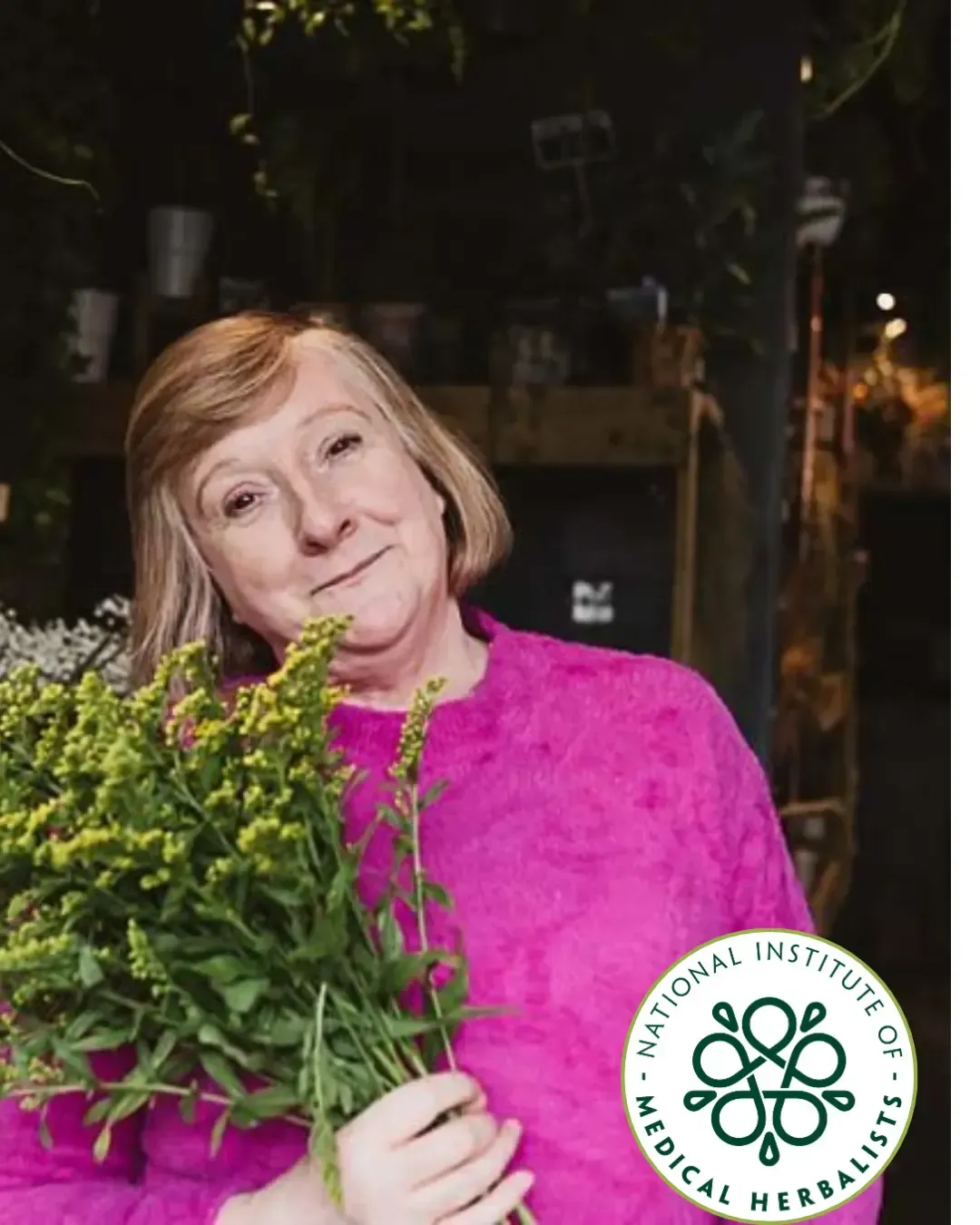
Hi, I'm Marie.
I'm a Registered Medical Herbalist with a special interest in women's hormone health.
Over the years, I've supported women experiencing everything from PMOS and painful periods to perimenopause, fatigue and complex hormone symptoms that often don't fit neatly into one diagnosis.
One thing I've learnt is this:
No blood test, scan or diagnosis can ever tell me as much as the woman sitting in front of me.
That's why I take the time to listen first.
Because when we understand the whole story, we can make far better decisions about how to support your health.
What my patients experience

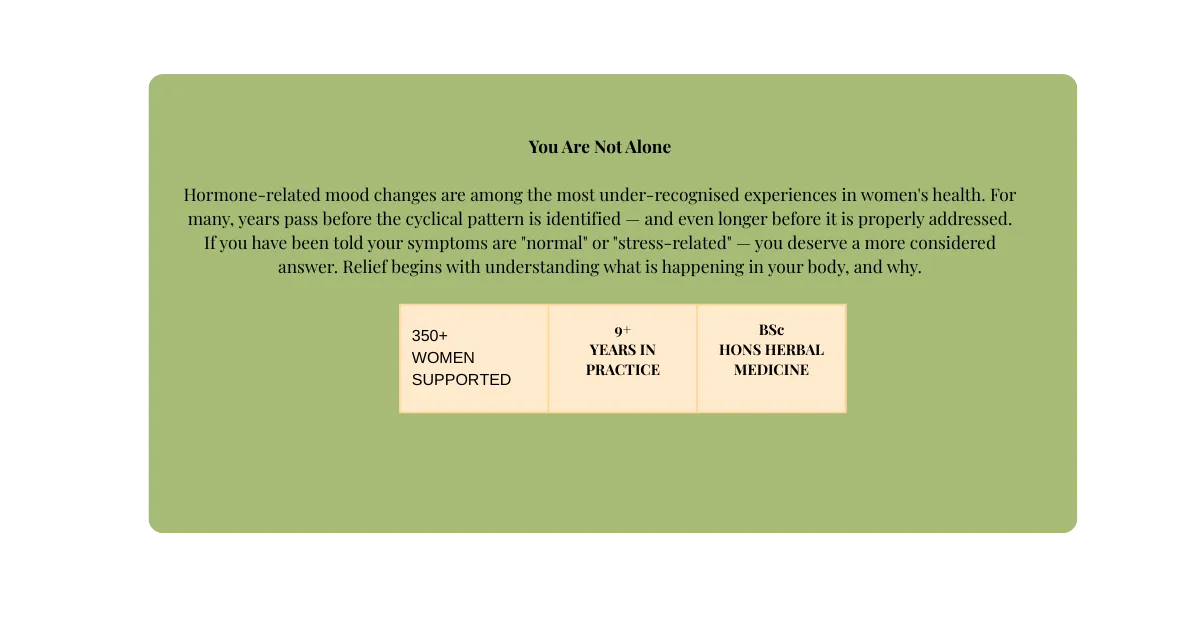
Patient's Feedback
Cycles that feel more settled
Energy that becomes steadier
Sleep that deepens gradually
Mood that feels less reactive
A renewed sense of clarity and confidence
YOU'RE IN THE RIGHT PLACE IF YOU...
if you’re ready to understand your body and commit to meaningful change.
it's not for quick supplemenation recommendations or one -off conversations. Because reclaiming balance takes intention
How you can work with me
If you are ready for structured, specialist hormone health care

Not sure where to start?
Every woman's journey is different.
That's why I've created several ways to begin, depending on where you are right now.
🌿 Just starting your journey?
Not sure which option is right for you?
Complete my complimentary questionnaire and I'll help point you towards the most appropriate next step.
Start Here → Hormone Health Questionnaire🌼 Looking for practical support you can start today?
Hormone Reset (£97)
If you're not quite ready for a consultation but would like a structured, evidence-based starting point, Hormone Reset is a gentle way to begin supporting your health.
Book your Hormone Reset Session £97🌳 Ready for personalised support?
Whether you're looking for comprehensive hormone care, specialist PMDD support or a one-off consultation, we'll find the pathway that's right for you.
Explore Ways to Work With Me →
A Pathway from Awareness to Support
Whether you are new to understanding your hormones or ready for clinical support, there is a place for you here.
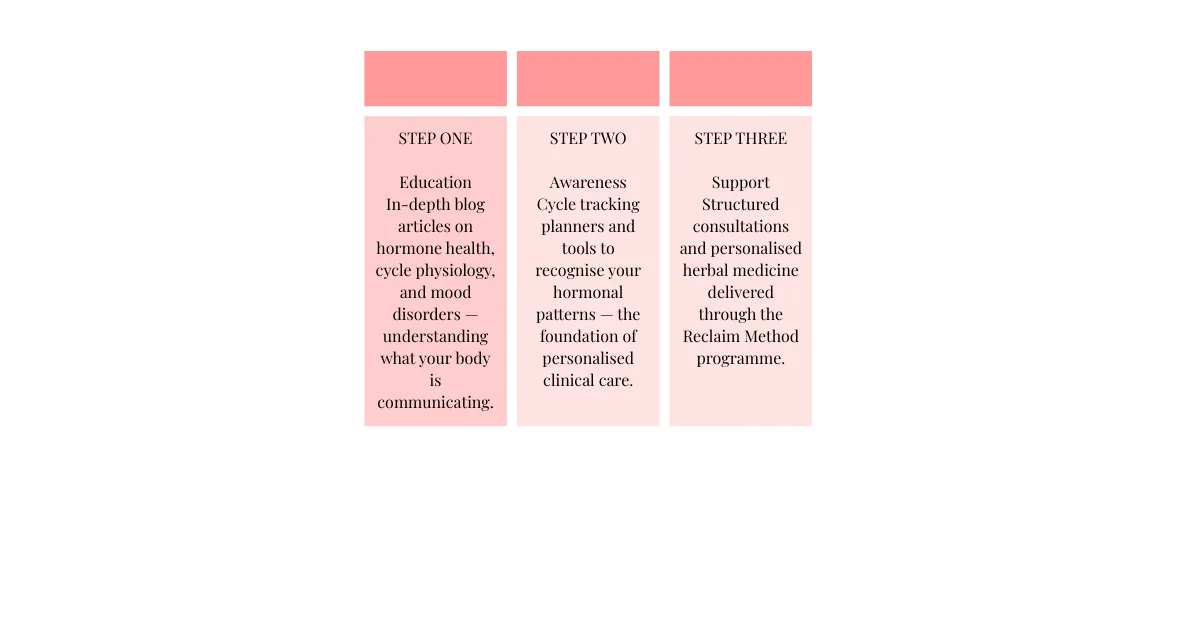
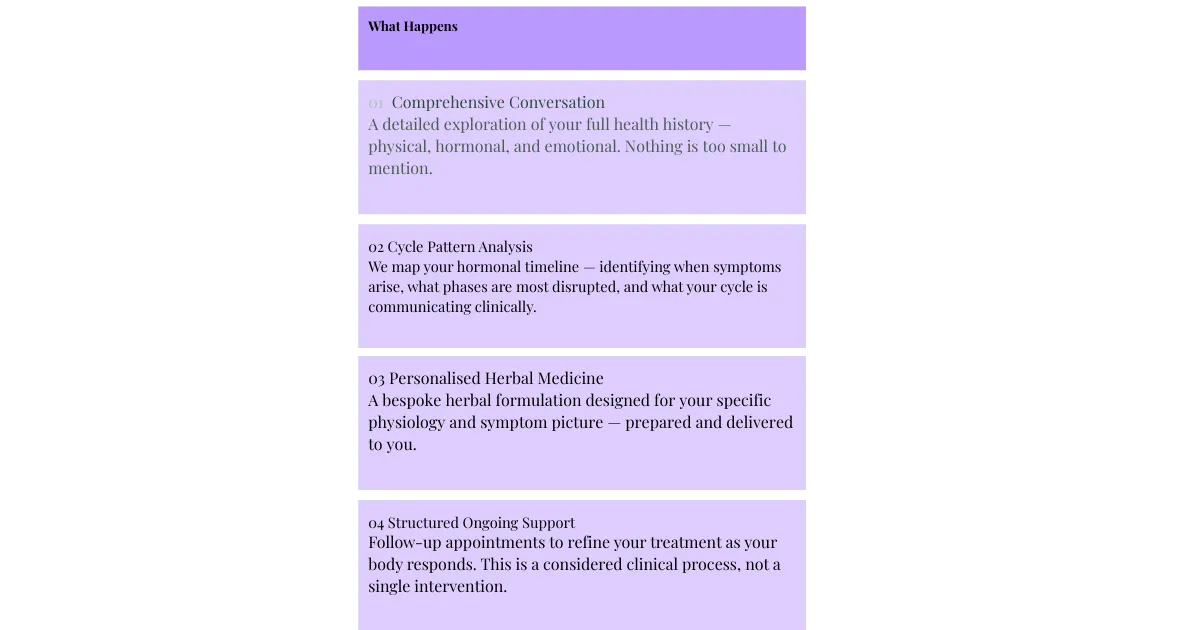
From Your First Consultation
FREE RESOURCES
join my....
Join the Hormone Health Inner Circle
Get instant access to my free Anti-inflammatory Recipes Pack — simple, nourishing recipes designed to help your body feel calmer and more supported, starting with your very next meal.
No fluff. No diet culture nonsense.
Just food that works with your body, not against it.
As a VIP member, you'll also be first to hear about new resources, offers, and updates as I create them.
Nature keeps you Well
All things natural health
🎙 Listen with Marie
Prefer to learn while you're walking the dog or driving to work?
Explore my podcast, where I break down hormone health into practical, evidence-based conversations.
→ Listen to the Podcast
Free Hormone Clarity Guide
Something feels off, but you can't quite name it. Not dramatic enough for the doctor, not subtle enough to ignore.
This guide helps you start noticing the pattern — energy, mood, sleep, symptoms so your body's story finally makes sense. No overwhelm, no long checklists. Just clarity.
Direct link, no email capture):
GET MY FREE GUIDE →
Free guide to Hormonal mood disorders and cycle-related mental health
No fluff — just a clear, evidence-based overview of the key hormone-related conditions affecting mood: PMOS, PMDD, perimenopause and more.
If you've ever wondered whether what you're feeling is "just you" or actually connected to your hormones, this guide will help you join the dots.
Explore the Hormone Library
I believe understanding your body shouldn't feel overwhelming.
That's why I've created a growing collection of evidence-based articles and podcast episodes designed to help you make sense of your hormones with confidence.
Start with some of the most popular topics:
• PMOS (formerly PCOS)
• Perimenopause
• Hormone testing explained
• Gut health and hormones
• Fatigue and energy
Explore the Hormone Library →
PMDD Natural Treatment: A Medical Herbalist's Evidence-Based Guide Beyond Chasteberry
PMDD Natural Treatment: A Medical Herbalist's Evidence-Based Guide Beyond Chasteberry
Written by Marie Mulcahy, BSc (Hons) Western Herbal Medicine, MNIMH Registered Medical Herbalist | Women's Hormonal Health Specialist | Clinics in Darwen and Clitheroe, Lancashire | Online consultations UK-wide NIMH membership: TS69F0D461A0101
In clinic, PMDD rarely arrives with a name attached. Most women come to me describing two weeks a month that feel completely unlike the rest — but by the time they're in front of me, they've often already been told it's "just stress," or offered antidepressants without anyone asking whether their symptoms follow their cycle.
That question — does this happen every month, roughly the same time — is often the missing piece. PMDD isn't just "bad PMS." It's a distinct, cyclical pattern, and recognising that pattern is usually the first real step toward understanding what's actually going on.
But as Marie Mulcahy, a registered Medical Herbalist (BSc Hons, MNIMH) who works clinically with women experiencing PMDD across my practices in Darwen and Clitheroe and via online consultations UK-wide, I want to gently push back on one thing: there's no single "cure," and almost every version of this trend stops at chasteberry (Vitex agnus-castus) as though it's the whole answer. It isn't.
In my clinical practice, the most common pattern I encounter is women who've already tried Vitex for two or three cycles, felt partial improvement, and then plateaued — because the nervous system piece was never addressed. PMDD is a complex neuroendocrine condition, and the women who find real, lasting relief are usually the ones who understand why their bodies react the way they do — not just which supplement to buy.
So let's talk about what's actually going on, and what the evidence supports beyond the one herb everyone's heard of.
What's Actually Happening in PMDD
PMDD isn't simply "bad PMS." It's now understood as a heightened sensitivity to the normal hormonal fluctuations of the luteal phase — particularly to allopregnanolone, a metabolite of progesterone that interacts with GABA receptors in the brain. In women with PMDD, this interaction appears to go awry, triggering the mood symptoms, rage, and anxiety that can feel completely disproportionate to what's happening physically.
This matters clinically because it means PMDD sits at the intersection of hormonal health and nervous system regulation. A natural approach that only targets hormones — and ignores the nervous system side — is usually only half the picture.
Beyond Chasteberry: What the Evidence Actually Supports
Saffron (Crocus sativus)
Saffron has some of the more compelling research behind it for PMDD specifically, not just general PMS. A randomised controlled trial published in Advanced Biomedical Research (Rajabi et al., 2020) found saffron may be as effective as fluoxetine — an antidepressant commonly prescribed for PMDD — but with a better safety profile and fewer side effects.
Clinically, I think of saffron as addressing the mood and emotional volatility side of PMDD more directly than chasteberry does, since chasteberry's primary action is on the pituitary-ovarian axis rather than on neurotransmitter activity. For women whose PMDD presents primarily as rage, tearfulness, or emotional swings in the luteal phase, saffron is often the first herb I reach for.
Magnesium and Vitamin B6
This pairing has a longer track record. A systematic review of nutritional approaches to menstrual cycle symptoms found that magnesium combined with vitamin B6 significantly reduced PMS and PMDD symptoms after four months of consistent use. Vitamin B6 plays a role in neurotransmitter synthesis — including serotonin and GABA — both highly relevant to PMDD's mood symptoms.
Clinical guidance suggests doses of 50–100mg of B6 daily can be beneficial, though doses above 100mg should be avoided due to the risk of peripheral neuropathy with long-term use. This is a good example of why working with a qualified practitioner matters: more isn't always better, and getting the dose wrong can cause its own problems.
Calcium
Often overlooked, calcium has some of the more robust trial data behind it. A large multicentre trial (Thys-Jacobs et al., 1998) found that 1200mg of calcium daily significantly reduced both the physical and emotional symptoms of PMS across a double-blind, randomised design. I find this one is frequently missing from "natural treatment" content, possibly because it's not as marketable as a trendy herbal tincture — but the evidence is genuinely strong, and I include it regularly in PMDD protocols.
Omega-3 Fatty Acids
Omega-3 fatty acids, found in walnuts, flaxseed, and fish oil, support brain health and reduce systemic inflammation, which may help with the mood-related and emotional symptoms of PMDD by supporting the body's stress response. I typically introduce omega-3 support alongside dietary changes rather than as a standalone supplement, since the anti-inflammatory benefits compound when combined with reducing pro-inflammatory foods in the diet generally.
Movement and Exercise
Consistently underrated. A randomised controlled trial published in BMC Women's Health (Kocak & Sevgin, 2025) found that regular physical activity helps ease menstrual symptoms and supports sleep quality — both of which play a significant role in PMDD management. The mechanism likely involves both endorphin release and the downstream effects of better sleep on emotional regulation. Sleep disruption is something I see consistently in PMDD presentations in clinic, and it often goes unaddressed in natural treatment plans.
Where Chasteberry Actually Fits
To be clear, chasteberry isn't wrong — it's just incomplete on its own. It has been studied specifically for its role in alleviating menstrual discomfort, including PMDD-related symptoms. A systematic review published in Archives of Women's Mental Health (Cerqueira et al., 2017) found it to be a safe, efficacious treatment for PMS and PMDD symptoms, typically at a dose around 400mg daily.
Chasteberry works primarily by supporting progesterone production via the pituitary gland. For some women — particularly those whose PMDD has a stronger hormonal imbalance component — it's genuinely useful. For others, especially where the nervous system and neurotransmitter piece is more dominant, it alone won't be enough. That's exactly why the "one herb cures all" framing of this social media trend falls short.
A Word of Caution on "Natural Treatment" Content
It's worth saying plainly: the assumption that "natural" automatically means "harmless" is a misconception worth treating with real caution. Herbal remedies and dietary supplements should be regarded as supportive interventions, not guaranteed cures.
Saffron, magnesium, B6, and chasteberry can all interact with medications, including hormonal contraceptives and antidepressants. If you're currently taking an SSRI or SNRI for PMDD, please don't stop or adjust that medication based on a social media trend — work with your prescriber and, ideally, a practitioner who can look at the whole picture alongside them.
What a Personalised, Evidence-Based PMDD Protocol Actually Looks Like
In my clinic, building a natural PMDD protocol isn't about picking the trendiest herb. It typically involves:
Mapping symptoms across the full cycle, not just the luteal phase, to understand the pattern — in my experience, the women who make the fastest progress are the ones who track consistently, because the data tells us where to look first
Addressing nervous system regulation (sleep, stress load, GABA-supportive nutrients) alongside hormonal support
Choosing herbal and nutritional support based on your specific symptom picture — rage and irritability point somewhere different than anxiety and tearfulness do
Reviewing diet for blood sugar stability and inflammation, both of which influence hormone metabolism
Building in consistent movement, not as an afterthought but as a core part of the plan
Frequently Asked Questions About Natural PMDD Treatment
Can PMDD really be treated naturally?
What is the most effective natural treatment for PMDD?
How long does it take for natural PMDD treatments to work?
Is chasteberry (Vitex) safe to take for PMDD?
Can PMDD get worse without treatment?
References
Bixo M, Ekberg K, Poromaa IS, Hirschberg AL, Johansson M, Rådestad A, et al. Treatment of premenstrual dysphoric disorder with the GABA-A receptor modulating steroid antagonist Sepranolone (UC1010) — a randomized controlled trial. Psychoneuroendocrinology. 2017;80:46–55. doi: 10.1016/j.psyneuen.2017.02.031
Hantsoo L, Epperson CN. Allopregnanolone in premenstrual dysphoric disorder (PMDD): evidence for dysregulated sensitivity to GABA-A receptor modulating neuroactive steroids across the menstrual cycle. Neurobiology of Stress. 2020;12:100213. doi: 10.1016/j.ynstr.2020.100213
Rajabi F, Rahimi M, Sharbafchizadeh MR, Tarrahi MJ. Saffron for the management of premenstrual dysphoric disorder: a randomized controlled trial. Advanced Biomedical Research. 2020;9:60. doi: 10.4103/abr.abr_49_20
Ebrahimi E, Khayati Motlagh S, Nemati S, Tavakoli Z. Effects of magnesium and vitamin B6 on the severity of premenstrual syndrome symptoms. Journal of Caring Sciences. 2012;1(4):183–189. doi: 10.5681/jcs.2012.026
Fathizadeh N, Ebrahimi E, Valiani M, Tavakoli N, Hojat Yar M. Evaluating the effect of magnesium and magnesium plus vitamin B6 supplement on the severity of premenstrual syndrome. Iranian Journal of Nursing and Midwifery Research. 2010;15(Suppl 1):401–405.
Women's Mental Health, Massachusetts General Hospital. Vitamin B6 in PMS: clinical guidance. MGH Center for Women's Mental Health. Available at: https://womensmentalhealth.org/specialty-clinics/pms-and-pmdd/
Thys-Jacobs S, Starkey P, Bernstein D, Tian J; Premenstrual Syndrome Study Group. Calcium carbonate and the premenstrual syndrome: effects on premenstrual and menstrual symptoms. American Journal of Obstetrics and Gynecology. 1998;179(2):444–452. doi: 10.1016/s0002-9378(98)70377-1
Kocak M, Sevgin O. The effect of exercise on menstrual symptoms: a randomized controlled trial. BMC Women's Health. 2025;25(1):406. doi: 10.1186/s12905-025-03940-8
Rafieian-Kopaei M, Movahedi M. Systematic review of premenstrual, postmenstrual and infertility disorders of Vitex agnus castus. Electronic Physician. 2017;9(1):3685–3689. doi: 10.19082/3685
Cerqueira RO, Frey BN, Leclerc E, Brietzke E. Vitex agnus-castus for premenstrual syndrome and premenstrual dysphoric disorder: a systematic review. Archives of Women's Mental Health. 2017;20(6):713–719. doi: 10.1007/s00737-017-0763-0
Comparison between GP and a Medical Herbalist
What is Herbal Medicine
Tell me more about conditions you work with
Anxiety Click on this condition here
Thyroid Click on this condition here
Menopause Click on this condition here
Women's Hormones Click on this condition here
75 min private portal
🔥 ABSENT BUT ACHIEVING
A Nervous System + Soul Reset for High-Functioning Women
You look fine.
You’re functioning.
You’re achieving.
But you don’t feel here.
You don’t need to crash to deserve reconnection.
In 60–75 minutes, you’ll feel back in your body — grounded, regulated, and present again.
Instant access.
Just £19
Digital planner
30 day lifestyle reset planner
The 30-Day Lifestyle Reset System
Rebuild Healthy Habits. Restore Discipline.
Rebuild Healthy Habits. Regain Momentum. Feel Like Yourself Again.
A Guided Digital Planner with Daily Prompts, Habit Trackers & Weekly Check-Ins.
Instant Download | Printable PDF
Feel Like Yourself Again.
For the woman who’s been in survival mode —
and is ready to come back home to herself.
Just £18
.