Marie Mulcahy Bsc Hons Western Herbal Medicine
Marie Mulcahy l BSc Hons Western Herbal Medicine | NIMH Registered | Online Consultations UK-Wide
You've been told everything looks "normal"...
But you still don't feel like yourself.
Perhaps your periods have changed.
You're exhausted no matter how much you sleep.
Your skin suddenly isn't behaving the way it used to.
You've been told you have PMOS (formerly PCOS), you're navigating perimenopause, or you simply know something isn't quite right even if your blood tests have come back "normal."
If you're tired of joining the dots on your own, you're in the right place.
I help women make sense of complex hormone symptoms through evidence-based herbal medicine and deeply personalised care.
Because your body isn't working against you.
It's communicating with you.
And together, we'll take the time to understand what it's trying to say.
Discover my approach -
You know your body.....
You know when something feels different
Maybe you've been told it's stress.
Or ageing.
Or that your results are "within normal range."
Yet you still don't have the energy you used to.
Your periods have changed.
Your digestion feels unpredictable.
Your sleep doesn't refresh you
Or perhaps you've been quietly wondering if this is simply something you have to accept.
I don't believe you should have to settle for uncertainty.
One of the things I hear most often from women when they first arrive is,
"I finally feel like someone is listening."
That matters.
Because before we talk about herbs...
Before we talk about treatment...
We begin with your story.

A different approach to hormone health
Hormones don't exist in isolation.
Neither do the women living with them.
That's why I don't focus on one symptom or one diagnosis.
Instead, we look at the bigger picture.
Together we'll explore how different systems in your body may be influencing one another, including:
Hormones and menstrual health
PMOS (formerly PCOS)
Perimenopause and menopause
Thyroid health
Digestive health and the gut microbiome
Stress and nervous system regulation
Sleep, energy and resilience
Nutrition and metabolic health
Because understanding why something is happening is often the first step towards meaningful change.
What's it like to work with me? 🌿
🌿 No two women walk into my clinic with exactly the same story.
So no two treatment plans are ever the same.
Every consultation is designed to help you:
🌿 Feel heard—not rushed.
🌿 Understand what's happening in your body.
🌿 Receive an individualised plan based on your health history, symptoms and goals.
🌿 Feel confident about the next steps in your hormone journey.
This isn't about chasing quick fixes or the latest wellness trend.
It's about thoughtful, evidence-based care that's tailored to you.
Hello, I’m Marie
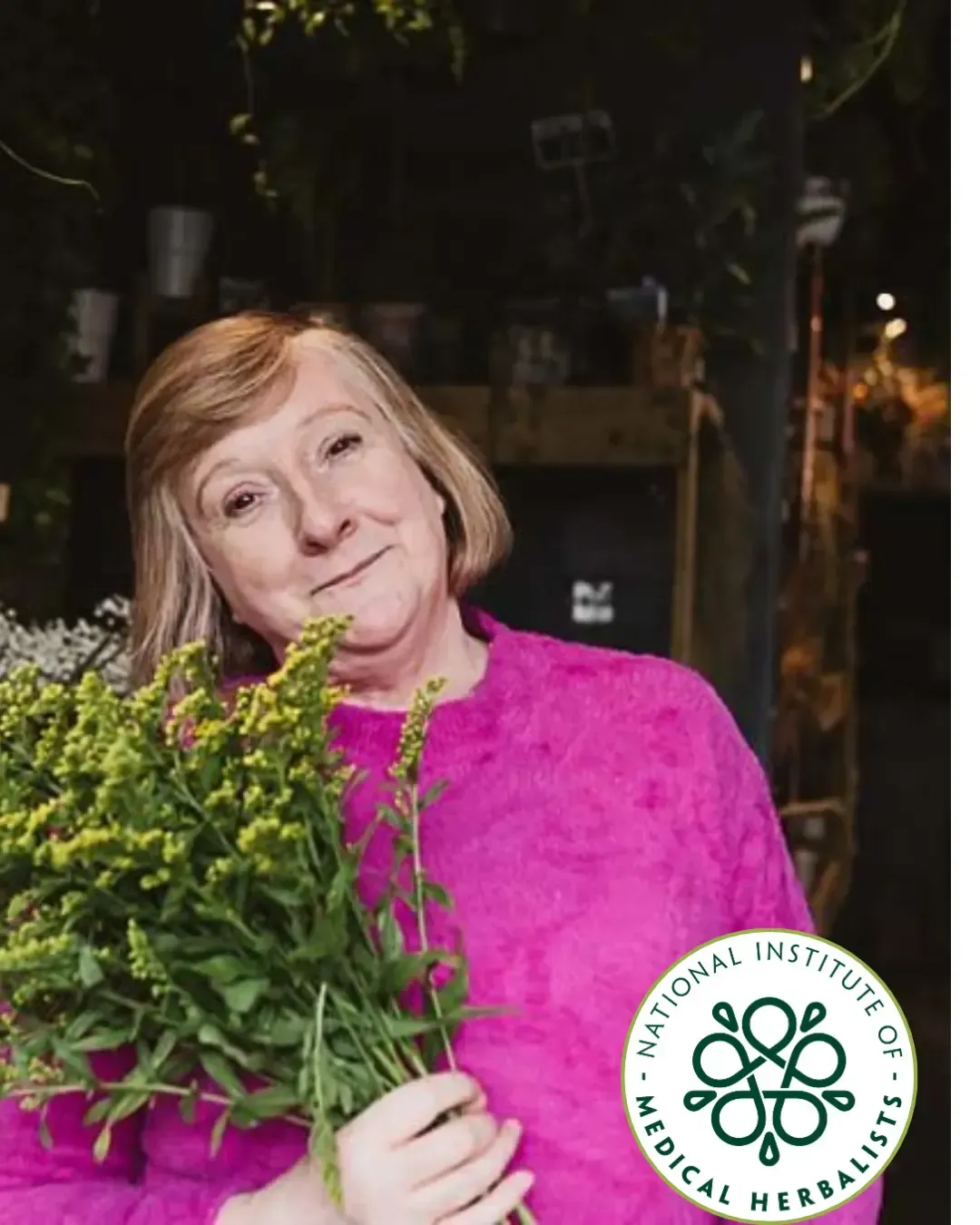
Hi, I'm Marie.
I'm a Registered Medical Herbalist with a special interest in women's hormone health.
Over the years, I've supported women experiencing everything from PMOS and painful periods to perimenopause, fatigue and complex hormone symptoms that often don't fit neatly into one diagnosis.
One thing I've learnt is this:
No blood test, scan or diagnosis can ever tell me as much as the woman sitting in front of me.
That's why I take the time to listen first.
Because when we understand the whole story, we can make far better decisions about how to support your health.
What my patients experience

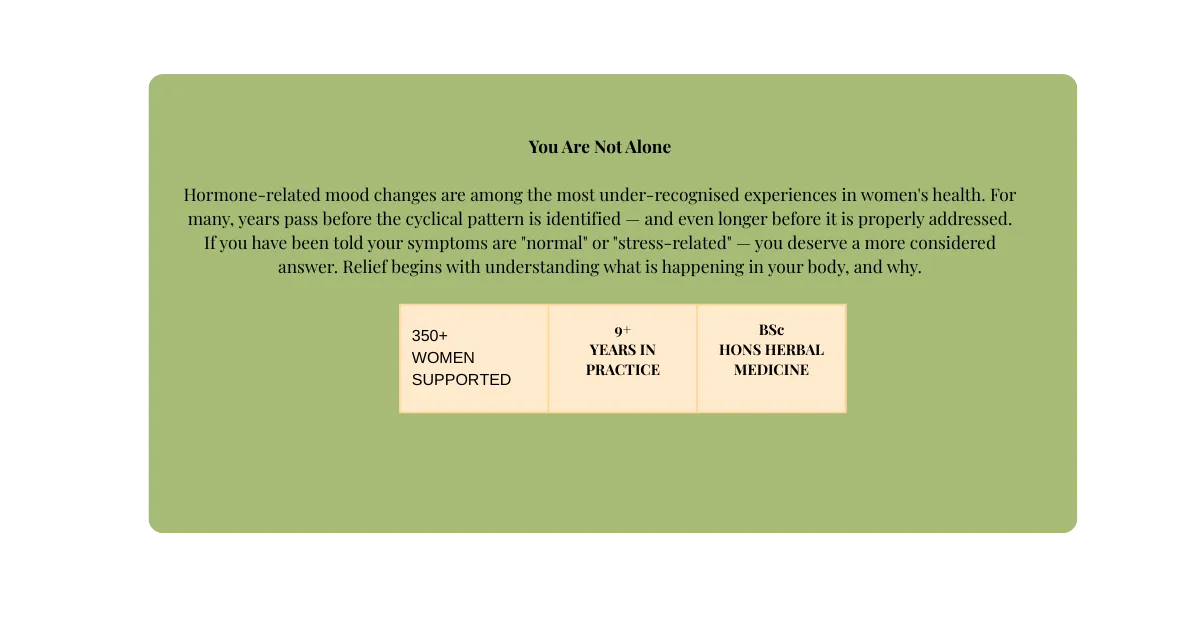
Patient's Feedback
Cycles that feel more settled
Energy that becomes steadier
Sleep that deepens gradually
Mood that feels less reactive
A renewed sense of clarity and confidence
YOU'RE IN THE RIGHT PLACE IF YOU...
if you’re ready to understand your body and commit to meaningful change.
it's not for quick supplemenation recommendations or one -off conversations. Because reclaiming balance takes intention
How you can work with me
If you are ready for structured, specialist hormone health care
Not sure where to start?
Every woman's journey is different.
That's why I've created several ways to begin, depending on where you are right now.
🌿 Just starting your journey?
Not sure which option is right for you?
Complete my complimentary questionnaire and I'll help point you towards the most appropriate next step.
Start Here → Hormone Health Questionnaire🌼 Looking for practical support you can start today?
Hormone Reset (£97)
If you're not quite ready for a consultation but would like a structured, evidence-based starting point, Hormone Reset is a gentle way to begin supporting your health.
Book your Hormone Reset Session £97🌳 Ready for personalised support?
Whether you're looking for comprehensive hormone care, specialist PMDD support or a one-off consultation, we'll find the pathway that's right for you.
Explore Ways to Work With Me →
A Pathway from Awareness to Support
Whether you are new to understanding your hormones or ready for clinical support, there is a place for you here.
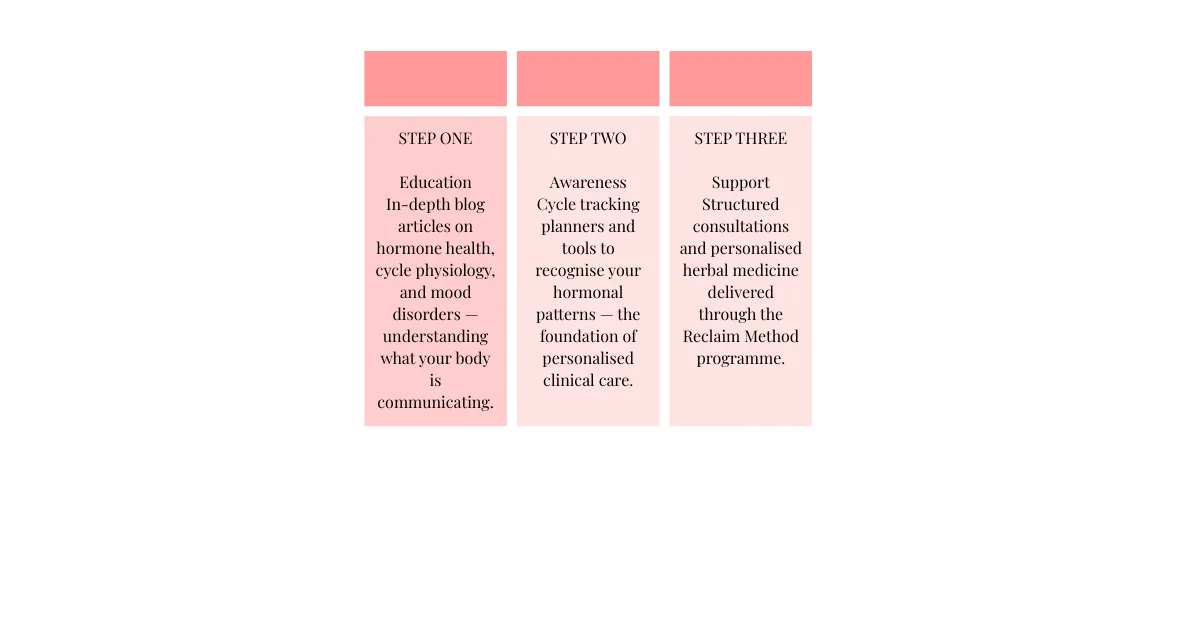
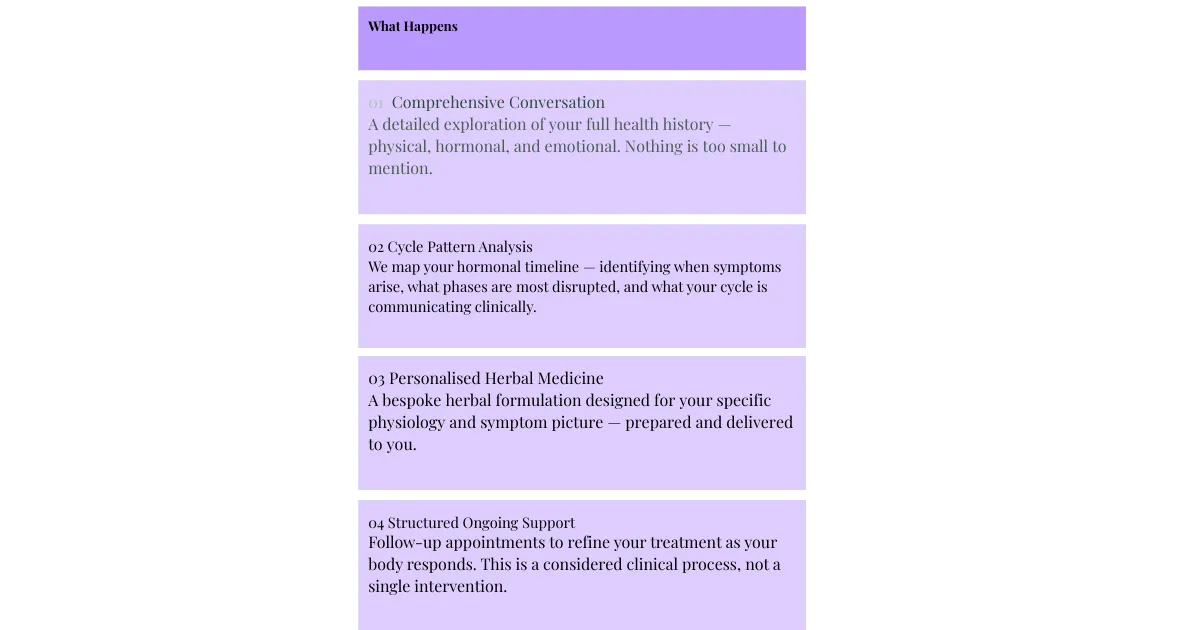
From Your First Consultation
FREE RESOURCES
join my....
Join the Hormone Health Inner Circle
Get instant access to my free Anti-inflammatory Recipes Pack — simple, nourishing recipes designed to help your body feel calmer and more supported, starting with your very next meal.
No fluff. No diet culture nonsense.
Just food that works with your body, not against it.
As a VIP member, you'll also be first to hear about new resources, offers, and updates as I create them.
Nature keeps you Well
All things natural health
🎙 Listen with Marie
Prefer to learn while you're walking the dog or driving to work?
Explore my podcast, where I break down hormone health into practical, evidence-based conversations.
→ Listen to the Podcast
Free Hormone Clarity Guide
Something feels off, but you can't quite name it. Not dramatic enough for the doctor, not subtle enough to ignore.
This guide helps you start noticing the pattern — energy, mood, sleep, symptoms so your body's story finally makes sense. No overwhelm, no long checklists. Just clarity.
Direct link, no email capture):
GET MY FREE GUIDE →
Free guide to Hormonal mood disorders and cycle-related mental health
No fluff — just a clear, evidence-based overview of the key hormone-related conditions affecting mood: PMOS, PMDD, perimenopause and more.
If you've ever wondered whether what you're feeling is "just you" or actually connected to your hormones, this guide will help you join the dots.
Explore the Hormone Library
I believe understanding your body shouldn't feel overwhelming.
That's why I've created a growing collection of evidence-based articles and podcast episodes designed to help you make sense of your hormones with confidence.
Start with some of the most popular topics:
• PMOS (formerly PCOS)
• Perimenopause
• Hormone testing explained
• Gut health and hormones
• Fatigue and energy
Explore the Hormone Library →
What is PMDD and How is it Different from PMS?
What is PMDD and How is it Different from PMS?
If you’ve ever felt like a completely different person in the week before your period — not just a bit tired or crampy, but genuinely unlike yourself — you are not imagining it, and you are not being dramatic.
Premenstrual dysphoric disorder, or PMDD, is a recognised hormonal condition that affects an estimated one in twenty women of reproductive age. It is severe, it is cyclical, and it is very different from the PMS that most people are familiar with.
As a NIMH-registered medical herbalist specialising in women’s hormonal health, I see PMDD in my clinic regularly — and far too often I see women who have spent years being told their symptoms are normal, or anxiety, or just how periods are. They’re not. So let’s be clear about what PMDD actually is.
What is PMDD?
PMDD stands for premenstrual dysphoric disorder. It is a severe form of premenstrual syndrome that causes significant psychological and physical symptoms in the luteal phase of the menstrual cycle — typically the one to two weeks before your period begins.
The key word here is dysphoric, which means a state of profound unease or dissatisfaction. Unlike PMS, PMDD doesn’t just make you feel off. It can make daily functioning genuinely difficult. Relationships suffer. Work suffers. And because symptoms disappear once your period arrives, it can be easy to dismiss — both by the woman experiencing it and by healthcare professionals.
PMDD is listed in the Diagnostic and Statistical Manual of Mental Disorders (DSM-5) as a depressive disorder, though its root cause is hormonal sensitivity rather than a mental health condition in the traditional sense.
What are the symptoms of PMDD?
PMDD symptoms typically appear in the second half of the menstrual cycle and resolve within a few days of your period starting. They include:
• Severe mood swings, often feeling out of proportion to circumstances
• Intense irritability or anger, sometimes described as PMDD rage
• Depression, hopelessness or feeling worthless
• Anxiety and feeling on edge or overwhelmed
• Difficulty concentrating and brain fog
• Fatigue and low energy
• Changes in appetite or food cravings
• Sleep disturbances
• Physical symptoms including bloating, breast tenderness and headaches
• Feeling out of control or unlike yourself
The crucial diagnostic feature is that these symptoms follow a clear cyclical pattern and lift once menstruation begins. If you feel this way all month, the cause is likely something different.
PMDD vs PMS — what is the difference?
This is the question I’m asked most often, and it matters enormously because the two conditions require different approaches.
PMS — premenstrual syndrome — affects the majority of women at some point in their lives. Symptoms are real and can be uncomfortable, but they are generally manageable. A bit of bloating, some irritability, mild fatigue. Life goes on, perhaps a little more slowly.
PMDD is categorically different. The psychological symptoms are significantly more severe. Women with PMDD often describe feeling suicidal during the luteal phase, being unable to leave the house, or not recognising themselves. Relationships and employment can be genuinely impacted.
A useful way to think about it: PMS is something you experience. PMDD is something that temporarily takes over.
What causes PMDD?
Research indicates that PMDD is not caused by abnormal hormone levels. Women with PMDD typically have normal oestrogen and progesterone levels. The difference is in how sensitive the brain is to the natural fluctuations of these hormones across the cycle.
In particular, there appears to be a sensitivity to progesterone and its metabolite allopregnanolone, which affects GABA receptors in the brain — the same receptors that regulate mood, anxiety and stress response. When progesterone rises in the luteal phase, women with PMDD have an atypical neurological response that triggers the severe symptoms we’ve described.
There is also a strong link between PMDD and a history of trauma, and between PMDD and conditions such as ADHD and autism. This does not mean PMDD is a psychological condition — it means the nervous system plays a significant role in how hormonal shifts are processed.
Can PMDD be treated naturally?
Yes — and this is where herbal medicine has a genuinely evidence-informed role to play. While conventional treatment typically involves SSRIs or the contraceptive pill, many women either cannot tolerate these or prefer to explore a more holistic route first.
In my clinic, I work with women to identify their specific hormonal pattern — because PMDD does not look the same in every woman — and create an individual herbal protocol alongside nutritional and lifestyle support. Key herbs I work with for PMDD include Vitex agnus-castus (chaste tree), which has the strongest evidence base for premenstrual conditions, alongside nervines, adaptogens and liver-supporting herbs depending on what the full picture looks like.
I have written more about the specific herbal approach to PMDD in my post on PMDD natural treatment, which you may find useful alongside this one.
When should you seek help for PMDD?
If your premenstrual symptoms are affecting your relationships, your work, or your sense of self — please do not wait and hope they improve on their own. PMDD is a recognised condition with effective treatment options, both conventional and herbal.
If you experience suicidal thoughts during your luteal phase, please speak to your GP as a matter of urgency. You can also contact Samaritans on 116 123 at any time.
PMDD Symptoms You Should Never Ignore
Frequently asked questions about PMDD symptoms
What are the main symptoms of PMDD? PMDD produces both psychological and physical symptoms in the luteal phase of the menstrual cycle. Psychological symptoms include severe depression, anxiety, rage, irritability, emotional dysregulation, brain fog, paranoia, and in some cases suicidal ideation. Physical symptoms include bloating, breast tenderness, headaches, joint pain, fatigue, and insomnia. To meet the diagnostic criteria for PMDD, at least five symptoms must be present and at least one must be a mood symptom. Crucially, symptoms must resolve after your period starts.
How is PMDD different from PMS? PMS (premenstrual syndrome) and PMDD exist on the same spectrum but differ significantly in severity. PMS produces mild to moderate symptoms that are uncomfortable but manageable. PMDD produces symptoms severe enough to impair daily functioning — affecting relationships, work performance, and quality of life. Women with PMDD often describe feeling like a completely different person in their luteal phase. The distinction matters because PMDD requires a different and more targeted treatment approach than general PMS support.
Which PMDD symptoms should I never ignore? Any suicidal thoughts or thoughts of self-harm in your luteal phase require immediate attention and should never be dismissed as "just hormones." Beyond this, symptoms you should take seriously include: rage episodes that are damaging your relationships, dissociation or feeling detached from reality, paranoid thoughts about your partner or colleagues, inability to function at work or care for your children, and symptoms that are worsening cycle by cycle. These indicate PMDD that needs professional support.
Can PMDD symptoms be mistaken for other conditions? Yes — PMDD is frequently misdiagnosed, which is why tracking your cycle is so important. The depression and anxiety of PMDD can be mistaken for clinical depression or generalised anxiety disorder. The rage and mood swings can be misdiagnosed as borderline personality disorder or bipolar disorder. The fatigue and brain fog can be attributed to thyroid issues or chronic fatigue. The key differentiator is always the cyclical timing — if symptoms are tied to your luteal phase and resolve with your period, PMDD should be considered.
What causes PMDD symptoms? The current understanding is that women with PMDD have a heightened neurological sensitivity to the normal hormonal fluctuations of the luteal phase — specifically the drop in progesterone and oestrogen after ovulation. This sensitivity appears to involve the GABA receptor system in the brain, which regulates mood, anxiety, and emotional regulation. There is also emerging evidence of a genetic component. Underlying hormonal imbalances such as low progesterone, oestrogen dominance, or poor liver detoxification of hormones can worsen PMDD symptoms significantly.
How long do PMDD symptoms last each cycle? PMDD symptoms typically begin after ovulation, around day 14-16 of a 28-day cycle, and resolve within 1-3 days of menstruation starting. This means women with PMDD can spend up to two weeks of every month experiencing severe symptoms. Some women have a shorter window of 7-10 days; others find symptoms begin as early as day 10. Tracking your symptoms precisely across 2-3 cycles will give you a clear picture of your personal PMDD window, which is valuable information for both diagnosis and treatment planning.
Is there effective treatment for PMDD? Yes — PMDD responds well to the right treatment approach. Conventional options include SSRIs (sometimes taken only in the luteal phase), the contraceptive pill, or in severe cases GnRH analogues. Natural and herbal approaches include Vitex agnus-castus, progesterone-supporting herbs, nervous system support, and targeted nutritional supplementation including magnesium, B6, and zinc. Many women find the best results come from a combination of approaches tailored to their specific hormone pattern. A medical herbalist specialising in women's hormonal health can assess your individual picture and create a protocol accordingly.
These FAQ sections are written by Marie Mulcahy, NIMH-registered Medical Herbalist BSc (Hons), specialising in women's hormonal health including PMDD, PCOS, and perimenopause. For a personalised consultation visit mariemulcahyhormonehealthspecialist.co.uk
Work with me
I am a NIMH-registered medical herbalist based in Lancashire with over a decade of clinical experience specialising in women’s hormonal health, including PMDD, PCOS, severe PMS and perimenopause. I offer online consultations UK-wide.
If you’d like to explore whether herbal medicine could help your PMDD, a 15-minute Hormone Clarity Call is a good place to start. It’s free and you can book directly online.
https://link.feacreate.com/widget/booking/pKKYkTGLEGotXXoMEMex
Or take my free hormone diagnostic quiz to find out which of your hormone axes may be out of balance.
https://mariemulcahyhormonehealthspecialist.co.uk/whatisgoingonwithyourhormones
Comparison between GP and a Medical Herbalist
What is Herbal Medicine
Tell me more about conditions you work with
Anxiety Click on this condition here
Thyroid Click on this condition here
Menopause Click on this condition here
Women's Hormones Click on this condition here
75 min private portal
🔥 ABSENT BUT ACHIEVING
A Nervous System + Soul Reset for High-Functioning Women
You look fine.
You’re functioning.
You’re achieving.
But you don’t feel here.
You don’t need to crash to deserve reconnection.
In 60–75 minutes, you’ll feel back in your body — grounded, regulated, and present again.
Instant access.
Just £19
Digital planner
30 day lifestyle reset planner
The 30-Day Lifestyle Reset System
Rebuild Healthy Habits. Restore Discipline.
Rebuild Healthy Habits. Regain Momentum. Feel Like Yourself Again.
A Guided Digital Planner with Daily Prompts, Habit Trackers & Weekly Check-Ins.
Instant Download | Printable PDF
Feel Like Yourself Again.
For the woman who’s been in survival mode —
and is ready to come back home to herself.
Just £18
.