Marie Mulcahy Bsc Hons Western Herbal Medicine
Marie Mulcahy l BSc Hons Western Herbal Medicine | NIMH Registered | Online Consultations UK-Wide
You've been told everything looks "normal"...
But you still don't feel like yourself.
Perhaps your periods have changed.
You're exhausted no matter how much you sleep.
Your skin suddenly isn't behaving the way it used to.
You've been told you have PMOS (formerly PCOS), you're navigating perimenopause, or you simply know something isn't quite right even if your blood tests have come back "normal."
If you're tired of joining the dots on your own, you're in the right place.
I help women make sense of complex hormone symptoms through evidence-based herbal medicine and deeply personalised care.
Because your body isn't working against you.
It's communicating with you.
And together, we'll take the time to understand what it's trying to say.
Discover my approach -
You know your body.....

You know when something feels different
Maybe you've been told it's stress.
Or ageing.
Or that your results are "within normal range."
Yet you still don't have the energy you used to.
Your periods have changed.
Your digestion feels unpredictable.
Your sleep doesn't refresh you
Or perhaps you've been quietly wondering if this is simply something you have to accept.
I don't believe you should have to settle for uncertainty.
One of the things I hear most often from women when they first arrive is,
"I finally feel like someone is listening."
That matters.
Because before we talk about herbs...
Before we talk about treatment...
We begin with your story.

A different approach to hormone health
Hormones don't exist in isolation.
Neither do the women living with them.
That's why I don't focus on one symptom or one diagnosis.
Instead, we look at the bigger picture.
Together we'll explore how different systems in your body may be influencing one another, including:
Hormones and menstrual health
PMOS (formerly PCOS)
Perimenopause and menopause
Thyroid health
Digestive health and the gut microbiome
Stress and nervous system regulation
Sleep, energy and resilience
Nutrition and metabolic health
Because understanding why something is happening is often the first step towards meaningful change.
What's it like to work with me? 🌿
🌿 No two women walk into my clinic with exactly the same story.
So no two treatment plans are ever the same.
Every consultation is designed to help you:
🌿 Feel heard—not rushed.
🌿 Understand what's happening in your body.
🌿 Receive an individualised plan based on your health history, symptoms and goals.
🌿 Feel confident about the next steps in your hormone journey.
This isn't about chasing quick fixes or the latest wellness trend.
It's about thoughtful, evidence-based care that's tailored to you.
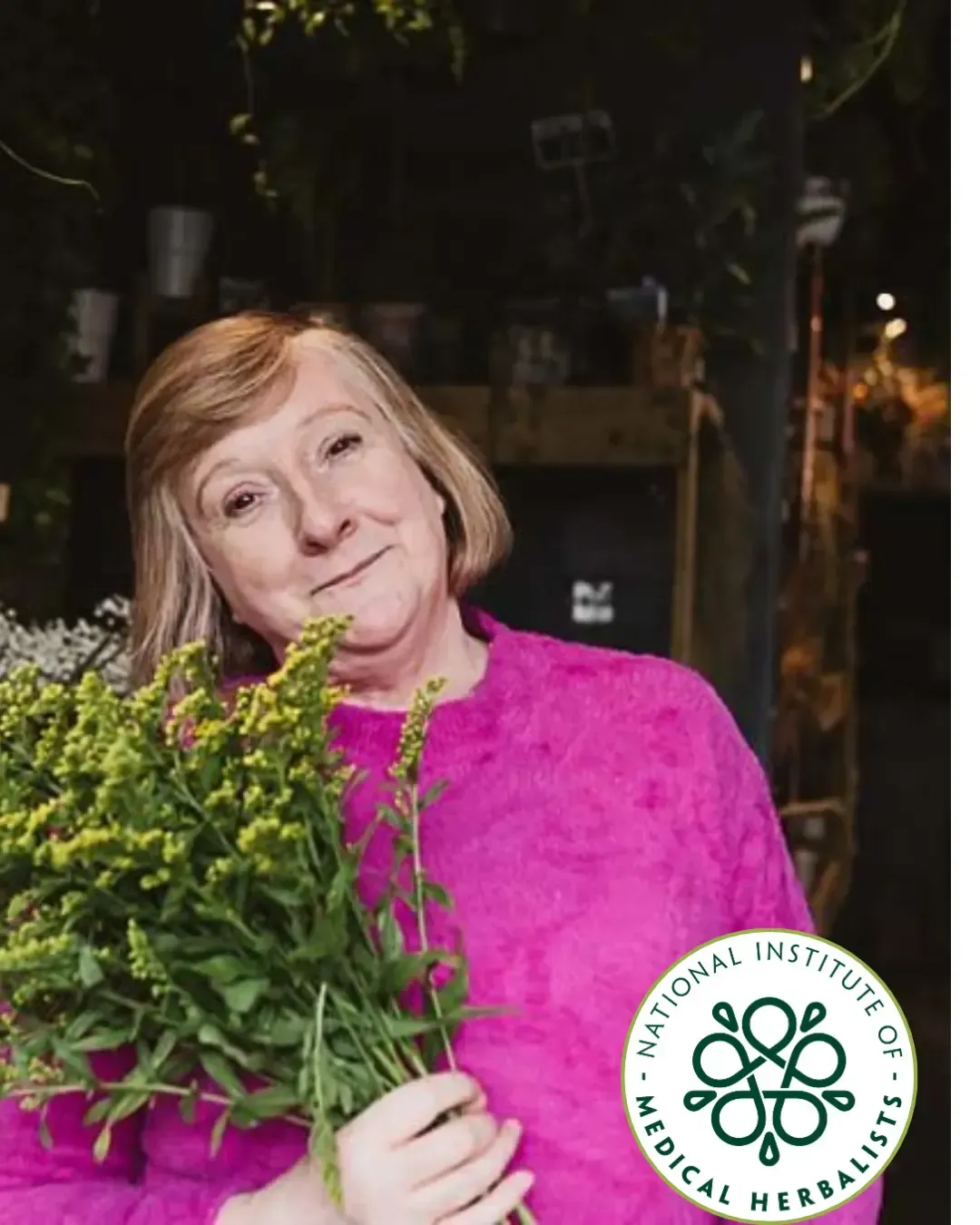
Hello, I’m Marie
Hi, I'm Marie.
I'm a Registered Medical Herbalist with a special interest in women's hormone health.
Over the years, I've supported women experiencing everything from PMOS and painful periods to perimenopause, fatigue and complex hormone symptoms that often don't fit neatly into one diagnosis.
One thing I've learnt is this:
No blood test, scan or diagnosis can ever tell me as much as the woman sitting in front of me.
That's why I take the time to listen first.
Because when we understand the whole story, we can make far better decisions about how to support your health.
What my patients experience

Patient's Feedback
Cycles that feel more settled
Energy that becomes steadier
Sleep that deepens gradually
Mood that feels less reactive
A renewed sense of clarity and confidence
YOU'RE IN THE RIGHT PLACE IF YOU...
if you’re ready to understand your body and commit to meaningful change.
it's not for quick supplemenation recommendations or one -off conversations. Because reclaiming balance takes intention
How you can work with me
If you are ready for structured, specialist hormone health care

Not sure where to start?
Every woman's journey is different.
That's why I've created several ways to begin, depending on where you are right now.
🌿 Just starting your journey?
Not sure which option is right for you?
Complete my complimentary questionnaire and I'll help point you towards the most appropriate next step.
Start Here → Hormone Health Questionnaire🌼 Looking for practical support you can start today?
Hormone Reset (£97)
If you're not quite ready for a consultation but would like a structured, evidence-based starting point, Hormone Reset is a gentle way to begin supporting your health.
Book your Hormone Reset Session £97🌳 Ready for personalised support?
Whether you're looking for comprehensive hormone care, specialist PMDD support or a one-off consultation, we'll find the pathway that's right for you.
Explore Ways to Work With Me →
A Pathway from Awareness to Support
Whether you are new to understanding your hormones or ready for clinical support, there is a place for you here.
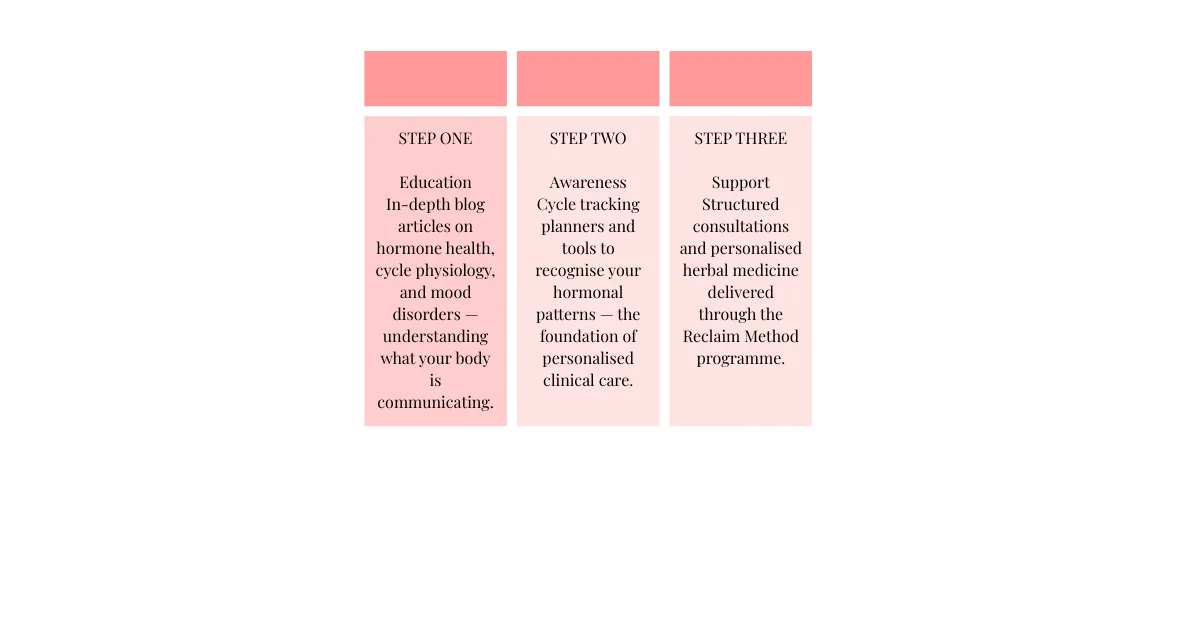
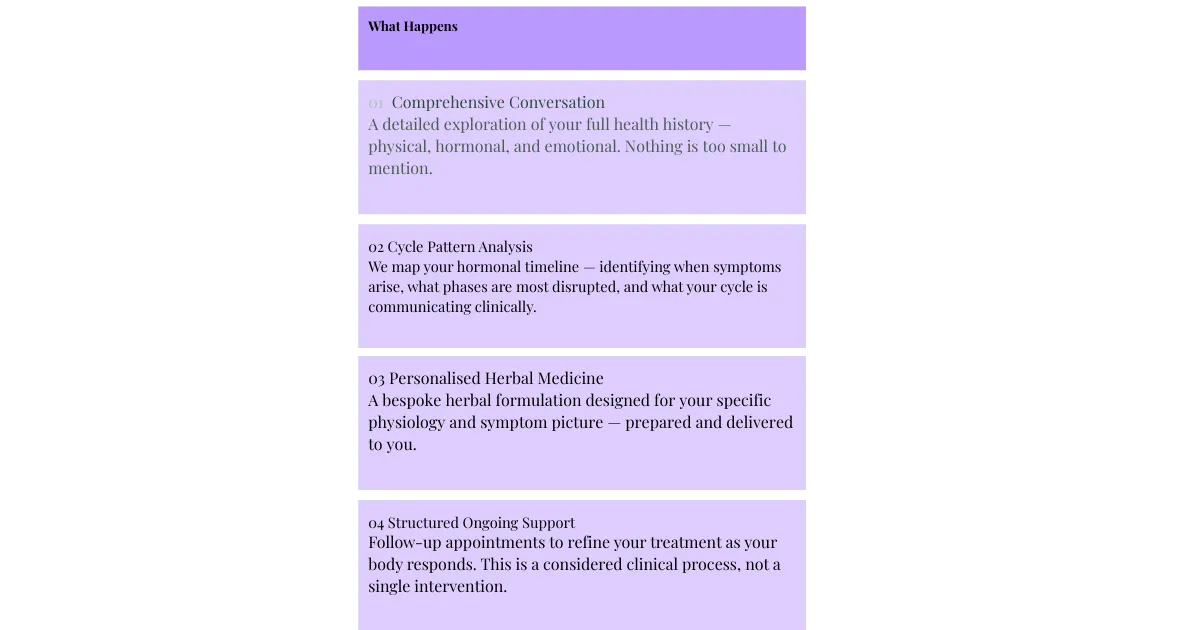
From Your First Consultation
FREE RESOURCES
join my....
Join the Hormone Health Inner Circle
Get instant access to my free Anti-inflammatory Recipes Pack — simple, nourishing recipes designed to help your body feel calmer and more supported, starting with your very next meal.
No fluff. No diet culture nonsense.
Just food that works with your body, not against it.
As a VIP member, you'll also be first to hear about new resources, offers, and updates as I create them.
Nature keeps you Well
All things natural health
🎙 Listen with Marie
Prefer to learn while you're walking the dog or driving to work?
Explore my podcast, where I break down hormone health into practical, evidence-based conversations.
→ Listen to the Podcast
Free Hormone Clarity Guide
Something feels off, but you can't quite name it. Not dramatic enough for the doctor, not subtle enough to ignore.
This guide helps you start noticing the pattern — energy, mood, sleep, symptoms so your body's story finally makes sense. No overwhelm, no long checklists. Just clarity.
Direct link, no email capture):
GET MY FREE GUIDE →
Free guide to Hormonal mood disorders and cycle-related mental health
No fluff — just a clear, evidence-based overview of the key hormone-related conditions affecting mood: PMOS, PMDD, perimenopause and more.
If you've ever wondered whether what you're feeling is "just you" or actually connected to your hormones, this guide will help you join the dots.

Explore the Hormone Library
I believe understanding your body shouldn't feel overwhelming.
That's why I've created a growing collection of evidence-based articles and podcast episodes designed to help you make sense of your hormones with confidence.
Start with some of the most popular topics:
• PMOS (formerly PCOS)
• Perimenopause
• Hormone testing explained
• Gut health and hormones
• Fatigue and energy
Explore the Hormone Library →
Endometriosis and Bloating: What's Really Going On? By Marie Mulcahy BSc Hons Western Herbal Medicine | NIMH Registered Medical Herbalist
Endometriosis is one of the conditions I hear the most frustration about — not because the pain isn't taken seriously, but because of how long it usually takes to get there. On average, women wait years for a diagnosis, often after being told the pain is "just bad periods" more times than they can count.
What I focus on in clinic isn't replacing that diagnostic process — it's what happens around it. Endometriosis doesn't exist in isolation from the rest of your hormonal system; inflammation, oestrogen metabolism, and stress all interact with it in ways that are rarely explained clearly. Understanding your own pattern — not just the diagnosis itself — is often what makes the biggest difference to how you actually feel day to day.
If you live with endometriosis, you'll know that the bloating can be just as distressing as the pain. The kind that appears suddenly, that makes your clothes feel unbearable, that leaves you looking visibly pregnant by the end of the day even when you haven't eaten anything unusual.
It has a name in the endometriosis community: endo belly.
And if you've ever been told it's "just bloating" or dismissed as something you need to manage with diet alone, I want to start by saying — what you're experiencing is real, it's recognised, and there are good reasons it keeps happening.
This post is for you whether you've just been diagnosed and are trying to make sense of your symptoms, or you've been living with endometriosis for years and nobody has ever really explained why your gut behaves the way it does.
Let's get into it.
What is endo belly?
Endo belly refers to the severe abdominal distension — visible bloating — that many women with endometriosis experience. Unlike the mild bloating that most people associate with eating certain foods, endo belly can be dramatic, painful, and often appears with little warning.
For some women it's cyclical, worsening in the days around menstruation. For others it's present throughout the month with unpredictable flares. Many describe feeling fine in the morning and severely distended by the afternoon.
It's not imagined. It's not simply a food sensitivity. And it's rarely caused by just one thing.
Why does endometriosis cause bloating?
This is where it gets interesting — and where mainstream medicine has often fallen short in offering a thorough explanation.
Research now points to several overlapping mechanisms, and understanding them matters because it changes how you approach support.
1. Inflammation and the peritoneal environment
Endometriosis is fundamentally an inflammatory condition. Endometrial-like tissue growing outside the uterus triggers a chronic inflammatory response in the peritoneal cavity — the space that houses your digestive organs.
This local inflammation can affect the way your bowel functions, alter gut motility (the speed at which food moves through your digestive system), and contribute to fluid accumulation — all of which show up as bloating and abdominal distension.
Research published in Biology of Reproduction (2025) acknowledges that the mechanisms behind abdominal bloating in endometriosis appear linked to an interplay between hormonal changes and gut inflammation, though this area continues to develop. [1]
2. Gut dysbiosis — the microbiome connection
One of the most important and still-emerging areas of endometriosis research is the relationship between the condition and the gut microbiome.
A 2024 review published in Reproduction and Fertility by researchers at the University of Edinburgh explored how the microbiota-gut-brain axis plays a role in endometriosis-associated symptoms, explicitly naming bloating, dysbiosis, and IBS-type symptoms as key features. [2]
Women with endometriosis are often found to have altered gut microbiome composition — a state known as dysbiosis. This matters because a disrupted microbiome affects intestinal permeability, triggers inflammatory responses, and alters how oestrogen is processed and recirculated in the body. All of these have knock-on effects for both endometriosis progression and digestive symptoms including bloating.
A study published in PMC (2025) found significant dysbiosis in endometriosis patients, including an altered ratio of gut bacteria and elevated inflammatory markers, suggesting a meaningful link between gut microbiota and systemic inflammation in endometriosis. [3]
3. The endometriosis-IBS overlap
This one surprises many women. Research shows that women with endometriosis are twice as likely to also be diagnosed with irritable bowel syndrome (IBS) compared to the general population. [2]
This isn't coincidence. A review in PMC found that shared mechanisms — including gut dysbiosis, immune dysfunction, and visceral hypersensitivity — appear to underpin both conditions. [4] The overlap is so significant that endometriosis is frequently misdiagnosed as IBS, delaying diagnosis by an average of seven to ten years.
This also means that the bloating many women with endometriosis experience may be driven by IBS-type mechanisms even in the absence of bowel endometriosis specifically — because the inflammatory environment of endometriosis affects gut function even when lesions haven't directly invaded the bowel.
4. Cross-organ effects and nerve signalling
Even when endometriosis lesions are not located on or near the bowel, gut symptoms can still occur. Researchers have described a "cross-organ" effect, where changes to the central nervous system caused by nerve signalling from endometriotic tissue can impact gut function. [5]
This means endometriosis can disrupt digestive health through nervous system pathways, not just through direct physical involvement of the bowel — which explains why so many women experience significant gut symptoms even when scans don't show bowel involvement.
5. Hormonal fluctuations throughout the cycle
Oestrogen and progesterone both influence gut motility. In the luteal phase — the days before your period — progesterone slows gut transit, which can worsen bloating. At menstruation, prostaglandins released to trigger the uterine lining to shed can stimulate the bowel, causing cramping, diarrhoea, and bloating simultaneously.
In endometriosis, this hormonal signalling is already dysregulated. The result is a gut that is often more reactive, more sensitive, and less predictable throughout the entire cycle, not just around menstruation.
Why endo belly is often worse than "normal" bloating
Several factors make bloating in endometriosis more severe and more distressing than typical functional bloating:
Visceral hypersensitivity — the nervous system becomes sensitised to gut sensations, meaning normal digestive processes feel disproportionately uncomfortable
Peritoneal inflammation — the inflammatory environment in the pelvis affects how the gut responds to food, stress, and hormonal changes
Impaired gut motility — slower or disrupted movement through the digestive tract allows gas to build up
Psychological impact — the visible distension affects body image, confidence, and daily functioning, which in turn influences the gut-brain axis and can worsen symptoms
What can help?
I want to be clear: there is no single fix for endo belly, and anyone suggesting otherwise isn't giving you the full picture. But there are approaches that can make a meaningful difference when they're tailored to your specific presentation.
Dietary approaches — low FODMAP diets have shown benefit for IBS-type symptoms in endometriosis patients, particularly bloating, pain, and altered bowel patterns. However, the low FODMAP diet is a short-term elimination and reintroduction protocol, not a permanent way of eating, and it works best under proper guidance. Anti-inflammatory dietary approaches also have a role to play.
Gut microbiome support — emerging research into probiotics, prebiotics, and microbiome-targeted approaches is promising, though the evidence base is still developing. Supporting the gut microbiome through diet and lifestyle is reasonable and unlikely to cause harm when done appropriately.
Stress and nervous system regulation — because of the gut-brain axis connection, supporting your nervous system has a direct impact on digestive function. This is often underestimated.
Herbal medicine — as a Medical Herbalist, I work with individually tailored herbal prescriptions that may support inflammatory regulation, digestive comfort, gut motility, and stress resilience. Every prescription is specific to the person, because no two women experience endometriosis in exactly the same way.
Working with your medical team — if you haven't had your bowel properly assessed and you're experiencing significant gut symptoms, this is worth discussing with your GP or gynaecologist. Bowel endometriosis, SIBO, and other conditions can present similarly and may require specific investigation.
A note on diagnosis
If you are experiencing significant, distressing bloating alongside other symptoms — particularly pelvic pain, painful periods, pain during intercourse, or fertility challenges — and you haven't yet been assessed for endometriosis, please do speak with your GP. Endometriosis is frequently missed and frequently misattributed to IBS. You deserve a thorough assessment.
In summary
Endometriosis bloating — endo belly — is a real, recognised, and often poorly explained symptom driven by a combination of inflammation, gut dysbiosis, hormonal changes, nervous system sensitisation, and the significant overlap between endometriosis and IBS.
It is not simply about what you eat. It is not something you simply have to tolerate. And understanding what's actually driving it is the first step toward finding support that actually helps.
Endometriosis and Bloating — What's Really Going On (Endo Belly)
Frequently asked questions about endometriosis bloating and endo belly
What is endo belly and why does it happen? Endo belly is the term used in the endometriosis community to describe the severe abdominal distension — visible, often dramatic bloating — that many women with endometriosis experience. Unlike ordinary bloating caused by food, endo belly can appear rapidly, feel painful, and make clothing uncomfortable by the end of the day. It happens because endometriosis drives chronic inflammation in the peritoneal cavity, disrupts the gut microbiome, affects gut motility through hormonal and nervous system pathways, and shares significant overlap with IBS-type mechanisms. It is not simply a food sensitivity issue and it is not imagined.
Is endo belly the same as normal bloating? No — endo belly is distinct from ordinary functional bloating in both its severity and its underlying causes. Normal bloating is typically triggered by specific foods, resolves within a few hours, and is not associated with significant pain or visible distension. Endo belly can be dramatically visible, is often painful, may appear with little warning and without an obvious food trigger, and tends to worsen cyclically around menstruation. Women with endometriosis also experience visceral hypersensitivity — a sensitisation of the nervous system that makes normal digestive sensations feel disproportionately uncomfortable — which amplifies the experience of bloating beyond what would be expected from the physical distension alone.
Why does endometriosis cause gut symptoms if the lesions aren't on the bowel? This is one of the most important and least understood aspects of endometriosis. Research has identified a cross-organ effect in which nerve signalling from endometriotic tissue affects gut function through central nervous system pathways, even when lesions have not directly invaded the bowel. Additionally, the chronic inflammatory environment of endometriosis affects the peritoneal cavity — which houses the digestive organs — altering gut motility and intestinal permeability. The significant overlap between endometriosis and gut dysbiosis means that the gut microbiome is disrupted in many women with endometriosis regardless of whether they have bowel endometriosis specifically.
What is the connection between endometriosis and IBS? Research shows that women with endometriosis are twice as likely to be diagnosed with IBS compared to the general population. This is not coincidence — shared mechanisms including gut dysbiosis, immune dysfunction, visceral hypersensitivity, and altered gut motility appear to underpin both conditions. The overlap is so significant that endometriosis is frequently misdiagnosed as IBS, contributing to the average diagnostic delay of seven to ten years. If you have been told you have IBS but also experience painful periods, pelvic pain, or pain during sex, endometriosis should be formally investigated.
How does the menstrual cycle affect endo belly? Endo belly often worsens at specific points in the cycle because oestrogen and progesterone directly influence gut motility and intestinal function. In the luteal phase before menstruation, rising progesterone slows gut transit, which can worsen bloating and constipation. At menstruation, prostaglandins released to trigger the uterine lining to shed can stimulate the bowel, causing cramping, diarrhoea, and bloating simultaneously. In endometriosis, hormonal signalling is already dysregulated, making the gut more reactive throughout the entire cycle — not just around menstruation. Tracking when your bloating is worst relative to your cycle can provide valuable information for both management and diagnosis.
Can herbal medicine help with endo belly? Herbal medicine can provide meaningful support for endo belly when it addresses the underlying mechanisms rather than simply treating the symptom. Anti-inflammatory herbs including turmeric, boswellia, and ginger work on the inflammatory pathways that drive peritoneal inflammation in endometriosis. Bitter herbs and digestive tonics including dandelion root, artichoke leaf, and gentian support gut motility and liver function, which affects oestrogen clearance. Gut-supporting herbs and nutrients that address dysbiosis reduce the microbiome-driven component of endo belly. Nervous system herbs including chamomile, lemon balm, and valerian support the gut-brain axis. Every prescription is tailored to the individual because no two women experience endometriosis in exactly the same way.
What dietary approach helps most with endo belly? There is no single dietary approach that works for every woman with endometriosis, but several principles have evidence behind them. A low FODMAP elimination and reintroduction protocol has shown benefit for IBS-type symptoms in endometriosis including bloating and pain, though it is a short-term diagnostic tool rather than a permanent diet. An anti-inflammatory dietary approach — emphasising oily fish, olive oil, colourful vegetables, berries, and reduced processed food and refined sugar — addresses the underlying inflammatory drivers of the condition. Reducing dietary oestrogens and supporting liver detoxification through cruciferous vegetables, fibre, and adequate hydration helps regulate the hormonal component. Working with a practitioner who understands endometriosis will produce a more targeted approach than generic elimination diets.
These FAQ sections are written by Marie Mulcahy, NIMH-registered Medical Herbalist BSc (Hons), specialising in women's hormonal health including PCOS, endometriosis, PMDD, and perimenopause. For a personalised consultation visit mariemulcahyhormonehealthspecialist.co.uk
If you're living with endometriosis and would like a personalised, whole-person approach to your symptoms, you can find out more about how I work here or take the free hormone health quiz to get your personalised hormone picture.
References
Oxford Academic / Biology of Reproduction (2025) — Endometriosis: new insights and opportunities for relief of symptoms https://academic.oup.com/biolreprod/article/113/5/1029/8211700
Hearn-Yeates F, Horne AW, O'Mahony SM, Saunders PTK (2024) — The impact of the microbiota–gut–brain axis on endometriosis-associated symptoms: mechanisms and opportunities for personalised management strategies. Reproduction and Fertility, 5(2). https://pmc.ncbi.nlm.nih.gov/articles/PMC11227073/
PMC (2025) — Gut Microbiota Dysbiosis in Endometriosis: A Potential Link to Inflammation and Disease Progression https://www.ncbi.nlm.nih.gov/pmc/articles/PMC12153989/
PMC — Microbiota in Irritable Bowel Syndrome and Endometriosis: Birds of a Feather Flock Together — A Review https://pmc.ncbi.nlm.nih.gov/articles/PMC10458414/
IBS Gut Health Clinic — Gut Health, Endometriosis and Dysbiosis https://ibsguthealthclinic.co.uk/gut-health-endometriosis-dysbiosis/

Comparison between GP and a Medical Herbalist
What is Herbal Medicine
Tell me more about conditions you work with
Anxiety Click on this condition here
Thyroid Click on this condition here
Menopause Click on this condition here
Women's Hormones Click on this condition here
75 min private portal
🔥 ABSENT BUT ACHIEVING
A Nervous System + Soul Reset for High-Functioning Women
You look fine.
You’re functioning.
You’re achieving.
But you don’t feel here.
You don’t need to crash to deserve reconnection.
In 60–75 minutes, you’ll feel back in your body — grounded, regulated, and present again.
Instant access.
Just £19
Digital planner
30 day lifestyle reset planner
The 30-Day Lifestyle Reset System
Rebuild Healthy Habits. Restore Discipline.
Rebuild Healthy Habits. Regain Momentum. Feel Like Yourself Again.
A Guided Digital Planner with Daily Prompts, Habit Trackers & Weekly Check-Ins.
Instant Download | Printable PDF
Feel Like Yourself Again.
For the woman who’s been in survival mode —
and is ready to come back home to herself.
Just £18
.