Marie Mulcahy Bsc Hons Western Herbal Medicine
Marie Mulcahy l BSc Hons Western Herbal Medicine | NIMH Registered | Online Consultations UK-Wide
You've been told everything looks "normal"...
But you still don't feel like yourself.
Perhaps your periods have changed.
You're exhausted no matter how much you sleep.
Your skin suddenly isn't behaving the way it used to.
You've been told you have PMOS (formerly PCOS), you're navigating perimenopause, or you simply know something isn't quite right even if your blood tests have come back "normal."
If you're tired of joining the dots on your own, you're in the right place.
I help women make sense of complex hormone symptoms through evidence-based herbal medicine and deeply personalised care.
Because your body isn't working against you.
It's communicating with you.
And together, we'll take the time to understand what it's trying to say.
Discover my approach -
You know your body.....
You know when something feels different
Maybe you've been told it's stress.
Or ageing.
Or that your results are "within normal range."
Yet you still don't have the energy you used to.
Your periods have changed.
Your digestion feels unpredictable.
Your sleep doesn't refresh you
Or perhaps you've been quietly wondering if this is simply something you have to accept.
I don't believe you should have to settle for uncertainty.
One of the things I hear most often from women when they first arrive is,
"I finally feel like someone is listening."
That matters.
Because before we talk about herbs...
Before we talk about treatment...
We begin with your story.

A different approach to hormone health
Hormones don't exist in isolation.
Neither do the women living with them.
That's why I don't focus on one symptom or one diagnosis.
Instead, we look at the bigger picture.
Together we'll explore how different systems in your body may be influencing one another, including:
Hormones and menstrual health
PMOS (formerly PCOS)
Perimenopause and menopause
Thyroid health
Digestive health and the gut microbiome
Stress and nervous system regulation
Sleep, energy and resilience
Nutrition and metabolic health
Because understanding why something is happening is often the first step towards meaningful change.
What's it like to work with me? 🌿
🌿 No two women walk into my clinic with exactly the same story.
So no two treatment plans are ever the same.
Every consultation is designed to help you:
🌿 Feel heard—not rushed.
🌿 Understand what's happening in your body.
🌿 Receive an individualised plan based on your health history, symptoms and goals.
🌿 Feel confident about the next steps in your hormone journey.
This isn't about chasing quick fixes or the latest wellness trend.
It's about thoughtful, evidence-based care that's tailored to you.
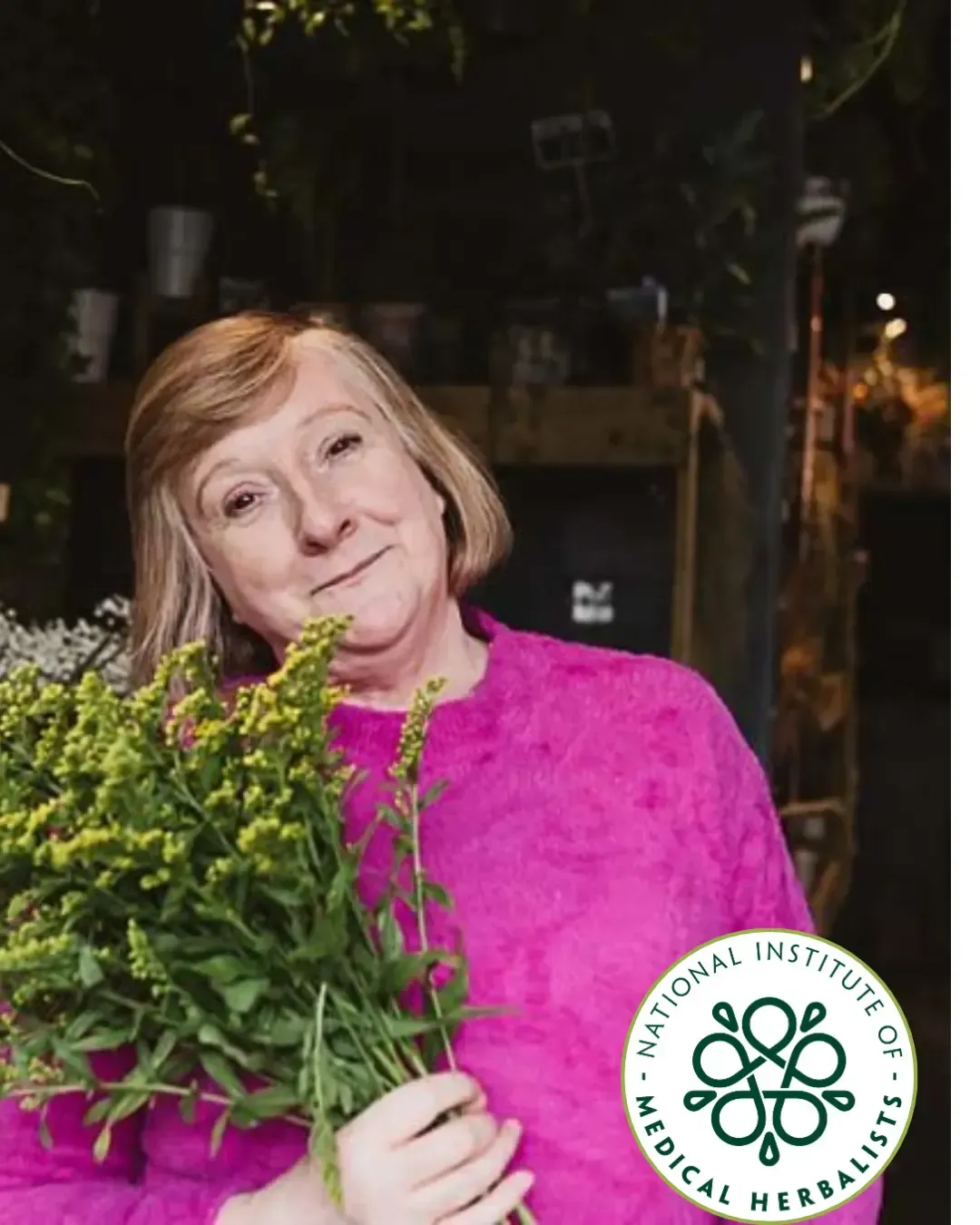
Hello, I’m Marie
Hi, I'm Marie.
I'm a Registered Medical Herbalist with a special interest in women's hormone health.
Over the years, I've supported women experiencing everything from PMOS and painful periods to perimenopause, fatigue and complex hormone symptoms that often don't fit neatly into one diagnosis.
One thing I've learnt is this:
No blood test, scan or diagnosis can ever tell me as much as the woman sitting in front of me.
That's why I take the time to listen first.
Because when we understand the whole story, we can make far better decisions about how to support your health.
What my patients experience

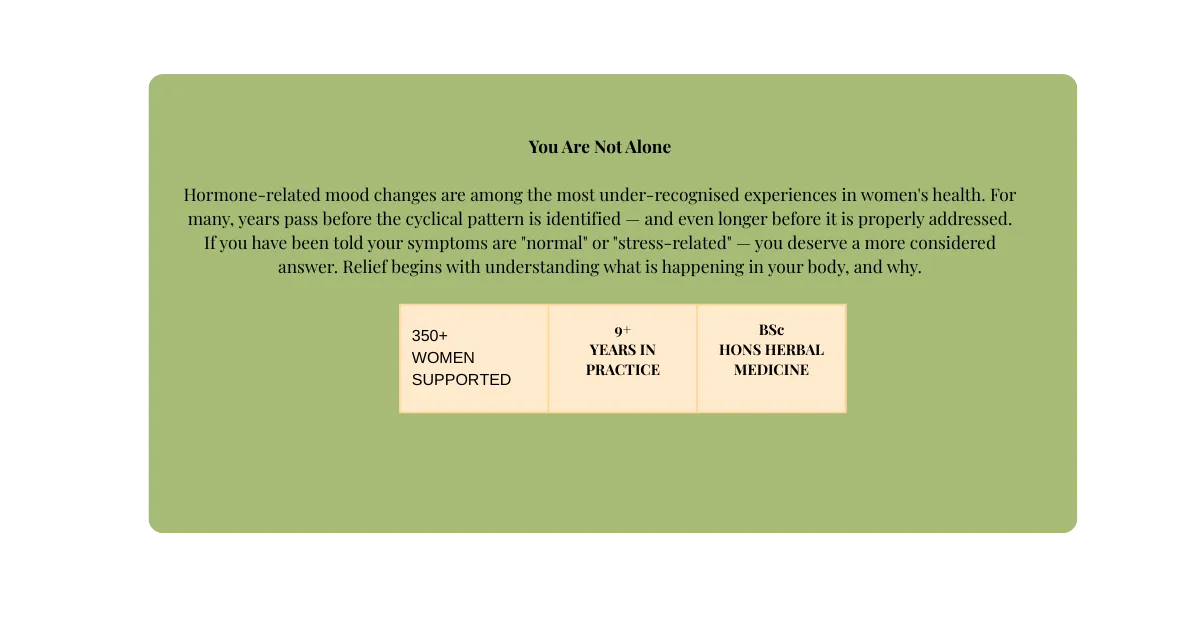
Patient's Feedback
Cycles that feel more settled
Energy that becomes steadier
Sleep that deepens gradually
Mood that feels less reactive
A renewed sense of clarity and confidence
YOU'RE IN THE RIGHT PLACE IF YOU...
if you’re ready to understand your body and commit to meaningful change.
it's not for quick supplemenation recommendations or one -off conversations. Because reclaiming balance takes intention
How you can work with me
If you are ready for structured, specialist hormone health care

Not sure where to start?
Every woman's journey is different.
That's why I've created several ways to begin, depending on where you are right now.
🌿 Just starting your journey?
Not sure which option is right for you?
Complete my complimentary questionnaire and I'll help point you towards the most appropriate next step.
Start Here → Hormone Health Questionnaire🌼 Looking for practical support you can start today?
Hormone Reset (£97)
If you're not quite ready for a consultation but would like a structured, evidence-based starting point, Hormone Reset is a gentle way to begin supporting your health.
Book your Hormone Reset Session £97🌳 Ready for personalised support?
Whether you're looking for comprehensive hormone care, specialist PMDD support or a one-off consultation, we'll find the pathway that's right for you.
Explore Ways to Work With Me →
A Pathway from Awareness to Support
Whether you are new to understanding your hormones or ready for clinical support, there is a place for you here.
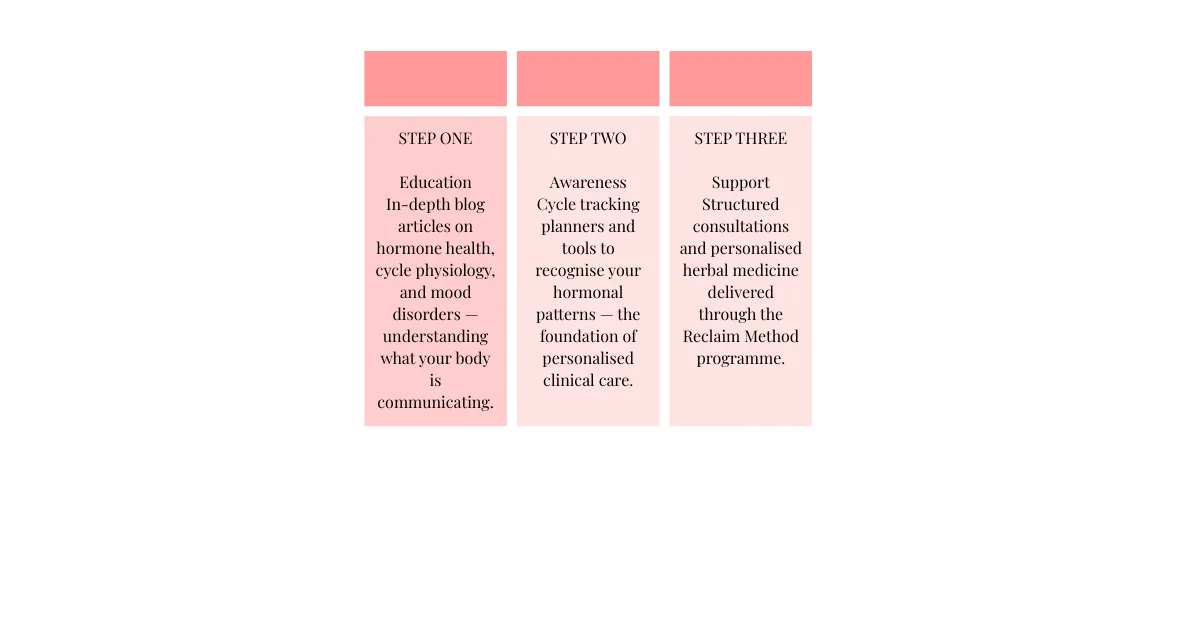
From Your First Consultation
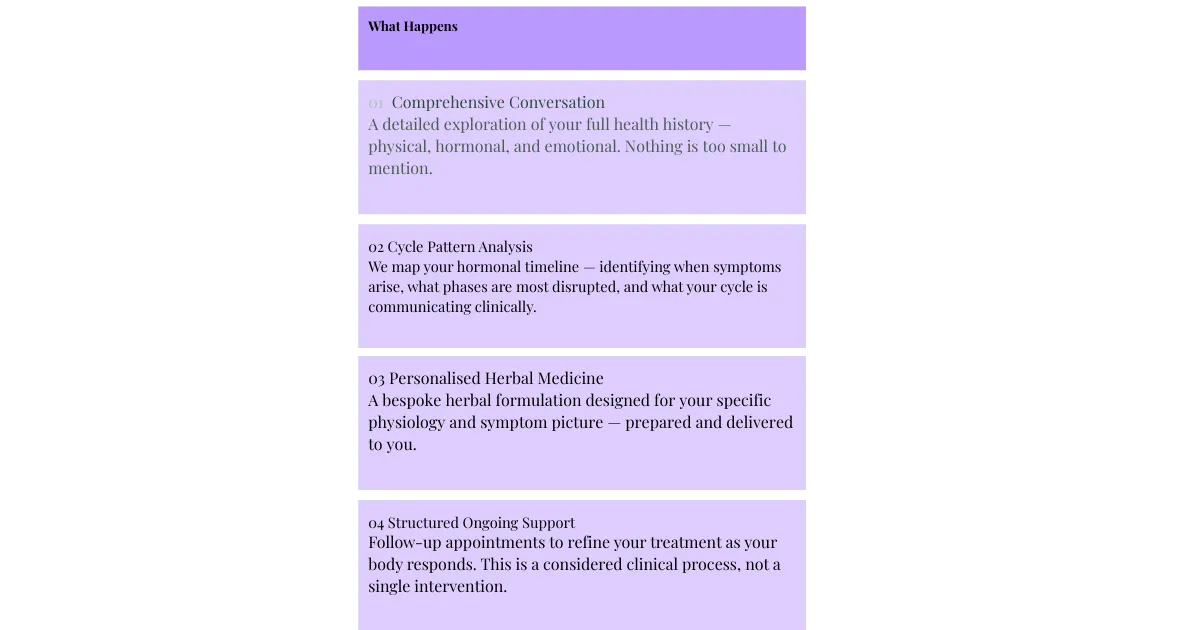
FREE RESOURCES
join my....
Join the Hormone Health Inner Circle
Get instant access to my free Anti-inflammatory Recipes Pack — simple, nourishing recipes designed to help your body feel calmer and more supported, starting with your very next meal.
No fluff. No diet culture nonsense.
Just food that works with your body, not against it.
As a VIP member, you'll also be first to hear about new resources, offers, and updates as I create them.
Nature keeps you Well
All things natural health
🎙 Listen with Marie
Prefer to learn while you're walking the dog or driving to work?
Explore my podcast, where I break down hormone health into practical, evidence-based conversations.
→ Listen to the Podcast
Free Hormone Clarity Guide
Something feels off, but you can't quite name it. Not dramatic enough for the doctor, not subtle enough to ignore.
This guide helps you start noticing the pattern — energy, mood, sleep, symptoms so your body's story finally makes sense. No overwhelm, no long checklists. Just clarity.
Direct link, no email capture):
GET MY FREE GUIDE →

Free guide to Hormonal mood disorders and cycle-related mental health
No fluff — just a clear, evidence-based overview of the key hormone-related conditions affecting mood: PMOS, PMDD, perimenopause and more.
If you've ever wondered whether what you're feeling is "just you" or actually connected to your hormones, this guide will help you join the dots.
Explore the Hormone Library
I believe understanding your body shouldn't feel overwhelming.
That's why I've created a growing collection of evidence-based articles and podcast episodes designed to help you make sense of your hormones with confidence.
Start with some of the most popular topics:
• PMOS (formerly PCOS)
• Perimenopause
• Hormone testing explained
• Gut health and hormones
• Fatigue and energy
Explore the Hormone Library →

PCOS Natural Treatment UK: What Your GP Hasn't Told You — And Why It's Now Called PMOS
PCOS Natural Treatment UK: What Your GP Hasn't Told You — And Why It's Now Called PMOS
What Is PMOS — and Why Has PCOS Just Been Renamed?
If you've recently seen the term PMOS appearing alongside PCOS, you're not imagining it — and you're not alone in feeling confused.
In May 2026, after years of international collaboration, a global consensus group published a landmark paper renaming polycystic ovary syndrome (PCOS). Its new name is PMOS — Polyendocrine Metabolic Ovarian Syndrome.
It's the same condition. But the new name tells a much more honest story about what's actually going on in the body.
Here's why the change matters. The old name focused attention on the ovaries — on cysts. But many women diagnosed with the condition never had ovarian cysts at all. And by putting "ovary" front and centre, the old name quietly hid the bigger picture: this is a whole-body condition, with metabolic, hormonal, cardiovascular, skin and emotional dimensions. That narrow framing is a big part of why so many women spend years being dismissed, misdiagnosed, or told everything looks "normal."
The new name — Polyendocrine Metabolic Ovarian Syndrome — was chosen deliberately to reflect that complexity, reduce stigma, and help women get diagnosed sooner.
What This Means If You Have PCOS (or Think You Might)
If you already have a PCOS diagnosis, nothing about your body has changed — only the name and the understanding around it. Diagnosis still rests on the same criteria: a combination of irregular cycles, signs of raised androgens, and the appearance of the ovaries on a scan.
But the spirit of the rename is something I've believed for years in my clinic: this was never just about your ovaries.
Common Symptoms of PMOS / PCOS
Women with PMOS often experience a combination of the following:
Irregular or unpredictable cycles
Fatigue that doesn't improve with rest
Mood changes, anxiety, or low mood — particularly in the luteal phase
Difficulty managing weight despite a healthy lifestyle
Skin changes, including acne or excess hair growth
A general sense that something is off — even when blood tests come back 'normal'
That last point is one I hear constantly in my clinic. Women who know their own bodies, who know something has shifted, but who are sent away with nothing more than a suggestion to lose weight or manage their stress. The rename matters here too — because the whole reason for moving away from "polycystic ovary syndrome" is that the condition was always bigger than any single scan or blood test.
Why Conventional Medicine Often Falls Short
The conventional approach to PMOS and hormonal imbalance tends to focus on symptom management — the contraceptive pill to regulate cycles, metformin for insulin sensitivity, or simply monitoring and waiting. For many women, these approaches don't address the root cause and can come with side effects that create new problems.
As a Medical Herbalist with over nine years of clinical experience and more than 350 patients, I take a different approach. Rather than isolating individual symptoms, I look at the whole picture — your hormones, your stress response, your gut health, your sleep, and your emotional wellbeing — because these systems are deeply interconnected.
PMOS Natural Treatment: What Herbal Medicine Can Offer
Herbal medicine has a long and evidence-informed tradition of supporting hormonal health. For women with PMOS, a personalised herbal protocol might include:
Adaptogens to support the adrenal system and regulate the stress response, which has a direct impact on sex hormone balance
Liver-supportive herbs to assist in oestrogen metabolism and clearance
Nervines to support mood, reduce anxiety, and improve sleep quality
Cycle-regulating herbs to encourage more predictable, less symptomatic cycles
Every prescription I create is completely bespoke. There is no one-size-fits-all approach to hormonal health — what works for one woman may not be right for another, which is why a thorough consultation is always the starting point.
Working With Marie: What to Expect
I offer online consultations across the UK, as well as in-person appointments in Darwen and Clitheroe, Lancashire. In your initial consultation, we will take a detailed look at your full medical history, your current symptoms, and the patterns your body has been showing you. From there, I create a structured, realistic plan that supports your body gently and naturally.
If you're searching for natural support for PCOS — now PMOS — in the UK, and you're tired of being told everything looks fine when it clearly doesn't, I'd love to help you find some answers.
Book a Hormone Reset Session or take the free hormone quiz to find out what's going on in your body.
Told your results are normal — but still don't feel right?
Standard tests don't always tell the full story. Take the free quiz for a personalised look at what might be driving your symptoms — practical, clear, and tailored to you.
Free. Takes just 2 minutes. No spam, ever.
PMOS Natural Treatment UK
Frequently asked questions about PMOS and natural treatment options
What is PMOS and how is it different from PCOS? PMOS stands for Polycystic Morphology Ovary Syndrome. It describes ovaries that have a polycystic appearance on ultrasound — multiple small follicles visible around the ovary — without necessarily presenting with the full hormonal profile previously required for a PCOS diagnosis. The distinction matters because many women with PMOS have been dismissed or told they don't have PCOS despite experiencing real, significant symptoms. Emerging research has led to this reclassification to more accurately reflect what is actually happening in the body and to ensure women receive appropriate support rather than being sent away with normal results.
Can you have PMOS symptoms with normal blood tests? Yes — this is one of the most frustrating aspects of PMOS for the women who experience it. Standard blood tests measuring LH, FSH, and testosterone may fall within normal reference ranges even when a woman is symptomatic. This is because PMOS sits in a grey area where the ovarian morphology is abnormal but the hormonal picture does not always meet the threshold previously required for a PCOS diagnosis. A thorough assessment should include ultrasound alongside a comprehensive hormone panel, and symptoms should always be taken seriously alongside test results rather than dismissed when numbers appear normal.
What are the most common symptoms of PMOS? Women with PMOS commonly experience irregular or unpredictable menstrual cycles, persistent fatigue that does not improve with rest, mood changes including anxiety and low mood particularly in the luteal phase, difficulty managing weight despite a healthy lifestyle, skin changes including acne or excess hair growth, and a general sense that something is off hormonally even when told everything looks fine. These symptoms overlap significantly with PCOS and reflect the same underlying disruption to hormone balance, ovarian function, and metabolic health.
Why does conventional medicine often miss PMOS? PMOS is frequently missed for several reasons. The reclassification is relatively recent and not yet universally adopted in clinical practice, meaning many GPs are still applying older PCOS diagnostic criteria. Standard NHS testing is often limited in scope and uses reference ranges that may not identify subclinical hormonal imbalances. Symptoms such as fatigue, mood changes, and cycle irregularity are common and easy to attribute to stress or lifestyle rather than underlying hormonal disruption. Women are also often told to lose weight or reduce stress rather than being given a thorough investigation, particularly if their BMI is in the normal range.
What does natural treatment for PMOS involve? Natural treatment for PMOS takes a whole-person approach rather than isolating individual symptoms. This includes assessing and supporting the stress response through adaptogenic herbs, as the HPA axis has a direct impact on sex hormone balance. Liver-supportive herbs assist oestrogen metabolism and clearance. Nervines address the mood, anxiety, and sleep disruption that many women with PMOS experience. Cycle-regulating herbs support more predictable, less symptomatic cycles. Nutritional support including inositol, magnesium, and zinc addresses the metabolic and ovarian function aspects. Every protocol is individually tailored because no two women present with PMOS in exactly the same way.
Is PMOS treatable with herbal medicine in the UK? Yes — herbal medicine has a well-established tradition of supporting hormonal conditions including those involving ovarian dysfunction, cycle irregularity, and the metabolic and mood symptoms associated with PMOS. As a NIMH-registered Medical Herbalist with over nine years of clinical experience, I offer both online consultations across the UK and in-person appointments in Lancashire. A thorough initial consultation looks at your full medical history, current symptoms, and the patterns your body has been showing you, and from there a bespoke herbal and nutritional protocol is created. Women who have been dismissed by conventional medicine often find that a whole-person herbal approach finally gives them the answers and support they have been looking for.
These FAQ sections are written by Marie Mulcahy, NIMH-registered Medical Herbalist BSc (Hons), specialising in women's hormonal health including PCOS, PMOS, endometriosis, PMDD, and perimenopause. For a personalised consultation visit mariemulcahyhormonehealthspecialist.co.uk
References
Teede HJ, Bahri Khomami M, Morman R, et al. Polyendocrine metabolic ovarian syndrome, the new name for polycystic ovary syndrome: a multistep global consensus process. The Lancet. 2026. https://doi.org/10.1016/S0140-6736(26)00717-8
Teede HJ, Tay CT, Laven J, et al. Recommendations from the 2023 International Evidence-based Guideline for the Assessment and Management of Polycystic Ovary Syndrome. Human Reproduction. 2023;38:1655–1679. https://doi.org/10.1093/humrep/dead156
Comparison between GP and a Medical Herbalist
What is Herbal Medicine
Tell me more about conditions you work with
Anxiety Click on this condition here
Thyroid Click on this condition here
Menopause Click on this condition here
Women's Hormones Click on this condition here
75 min private portal
🔥 ABSENT BUT ACHIEVING
A Nervous System + Soul Reset for High-Functioning Women
You look fine.
You’re functioning.
You’re achieving.
But you don’t feel here.
You don’t need to crash to deserve reconnection.
In 60–75 minutes, you’ll feel back in your body — grounded, regulated, and present again.
Instant access.
Just £19
Digital planner
30 day lifestyle reset planner
The 30-Day Lifestyle Reset System
Rebuild Healthy Habits. Restore Discipline.
Rebuild Healthy Habits. Regain Momentum. Feel Like Yourself Again.
A Guided Digital Planner with Daily Prompts, Habit Trackers & Weekly Check-Ins.
Instant Download | Printable PDF
Feel Like Yourself Again.
For the woman who’s been in survival mode —
and is ready to come back home to herself.
Just £18
.