Join the Hormone Health Inner Circle
Get instant access to my free Anti-inflammatory Recipes Pack — simple, nourishing recipes designed to help your body feel calmer and more supported, starting with your very next meal.
No fluff. No diet culture nonsense.
Just food that works with your body, not against it.
As a VIP member, you'll also be first to hear about new resources, offers, and updates as I create them.
FREE RESOURCES
Nature keeps you Well
All things natural health
🎙 Listen with Marie
Prefer to learn while you're walking the dog or driving to work?
Explore my podcast, where I break down hormone health into practical, evidence-based conversations.
Free Hormone Clarity Guide
Something feels off, but you can't quite name it. Not dramatic enough for the doctor, not subtle enough to ignore.
This guide helps you start noticing the pattern — energy, mood, sleep, symptoms so your body's story finally makes sense. No overwhelm, no long checklists. Just clarity.
Your Free Guide Is Here | Hormone Health with Marie
The pattern you've been trying to put into words?
It's in here.
You've just taken the first step most women skip — actually naming what's going on with your hormones instead of pushing through it.
This guide breaks down the key hormone-related conditions that affect mood — PMOS, PMDD, perimenopause, and the cycle-related mental health patterns that connect them — so you can start recognising your own pattern instead of wondering if it's "just you."
Explore the Hormone Library
I believe understanding your body shouldn't feel overwhelming.
That's why I've created a growing collection of evidence-based articles and podcast episodes designed to help you make sense of your hormones with confidence.
Start with some of the most popular topics:
• PMOS (formerly PCOS)
• Perimenopause
• Hormone testing explained
• Gut health and hormones
• Fatigue and energy
Explore the Hormone Library →
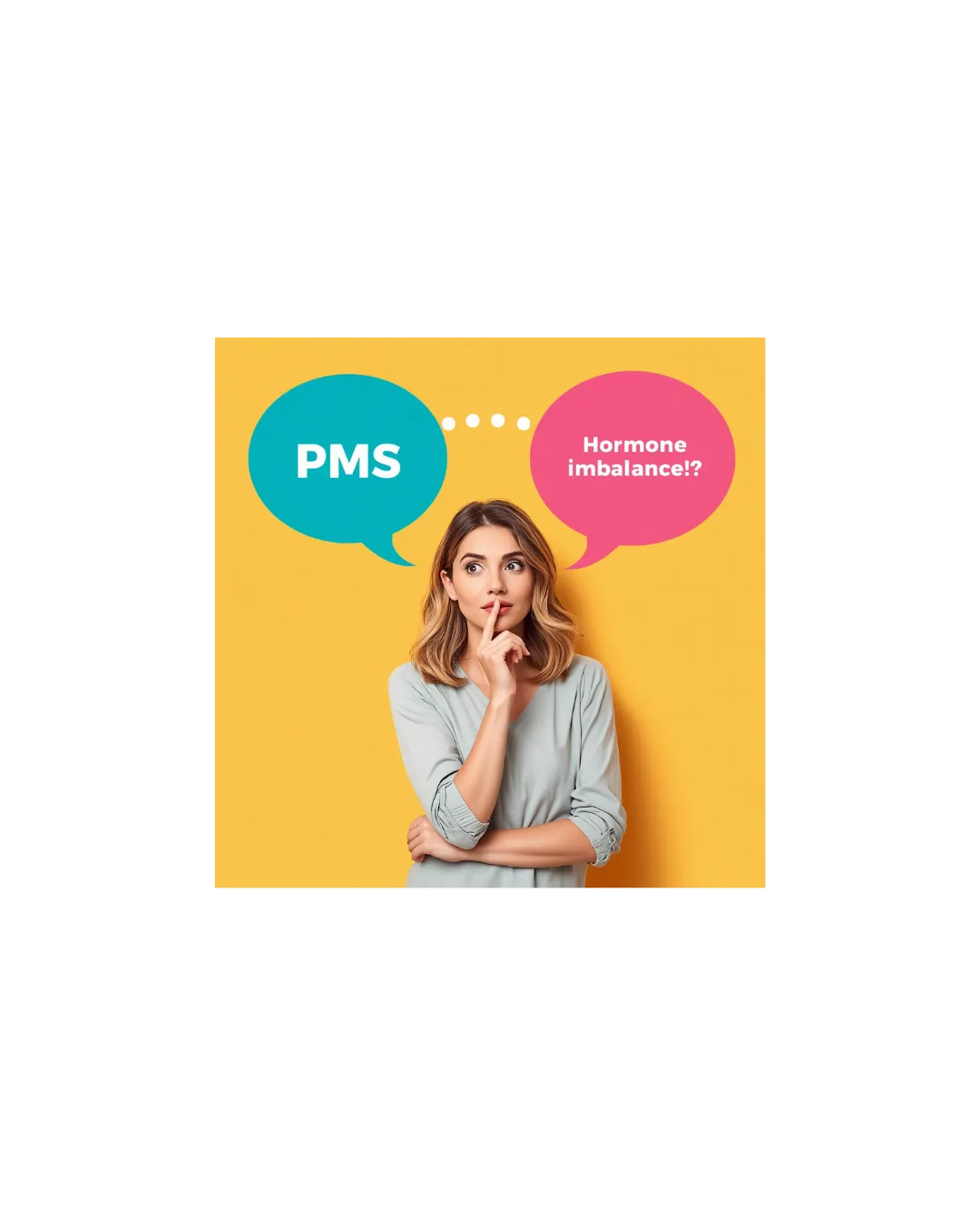
Is It PMS... Or a Hormone Imbalance?
Every month, it's the same question running through your mind: is this just PMS, or is something actually wrong?
Maybe it's the mood swings that feel bigger than "a bit hormonal." Maybe it's the bloating that shows up like clockwork, or the exhaustion that no amount of sleep seems to touch. You've been told it's normal. You've been told it's just part of being a woman. But somewhere underneath all that reassurance, you're still asking the question.
Here's what I tell my clients in clinic: that question is worth taking seriously.
What "normal" PMS actually looks like
Premenstrual symptoms are incredibly common, and a certain amount of change in the days before your period is expected. Typical PMS might include:
Mild bloating or breast tenderness
Slight mood changes a bit more sensitive, a bit more tired
Symptoms that show up a few days before your period and ease once it starts
Symptoms you can manage without it derailing your week
The key word there is manage. Normal PMS is noticeable, but it doesn't usually take over your life.
When it might be more than PMS
This is the pattern I see, week after week, in women who've been told everything is normal — but something still feels off. A few signs it may be worth looking deeper than "just PMS":
The symptoms are constant, not just cyclical. If fatigue, brain fog, low mood, or bloating are showing up all month — not just in the days before your period — that points toward something broader than premenstrual changes alone. This is a pattern I often see linked to thyroid function or blood sugar balance, rather than the menstrual cycle in isolation.
The severity feels disproportionate. If the week before your period brings a level of mood change, rage, or hopelessness that genuinely disrupts your work, relationships, or ability to function — and it lifts once your period starts — that specific pattern is one I take very seriously in clinic, as it can point toward PMDD rather than standard PMS.
Your cycle itself has changed. Periods becoming heavier, lighter, closer together, or further apart, alongside new symptoms, is often a sign your hormone patterns are shifting — something I see frequently in the perimenopause transition, sometimes a decade earlier than most women expect.
You've collected a list of "unrelated" symptoms. Cold hands, thinning hair, skin changes, sleep disruption, and mood shifts might seem like separate issues. In clinic, I often find they're connected threads of the same underlying pattern — which is exactly why treating each symptom individually so often falls short.
Why this gets missed so often
I don't think most women have a hormone problem. I think we have an information problem.
Somewhere along the way, we've been taught to normalise feeling exhausted, foggy, and uncomfortable. A standard blood panel can come back "normal" and still miss what's actually going on — because hormones don't operate in isolation, and a single snapshot test rarely tells the full story of a pattern that plays out across your whole cycle.
As a NIMH-registered Medical Herbalist, this is the gap I built my practice to close: not another supplement or another generic checklist, but a proper look at your full history, your cycle, and your patterns — so you understand what your body has actually been trying to tell you.
What to do next
If this is sounding familiar, the most useful next step isn't another late-night search session. It's getting a clear, personalised picture of what's actually happening in your body.
That's exactly what the Hormone Reset Session is for — a focused consultation to help you understand your patterns and make sense of your symptoms, rather than continuing to guess.
Book your Hormone Reset Session →
FAQs
Is it normal to have mood swings before my period? Some mood change before your period is common and considered normal PMS. However, if the mood change is severe enough to disrupt your work, relationships, or daily functioning, and lifts once your period starts, it may point to something more specific, such as PMDD, which benefits from a different approach.
Can hormone imbalances cause symptoms all month, not just before my period? Yes. If symptoms like fatigue, low mood, or bloating are present throughout the month rather than easing after your period starts, this often points to a broader hormonal pattern — such as thyroid function or blood sugar balance — rather than premenstrual changes alone.
Should I get a blood test if I think I have a hormone imbalance? Standard blood tests can be a useful starting point, but they only capture a single moment in time and don't always reflect how your hormones behave across your full cycle. A pattern-based approach, looking at your symptoms alongside your history, often reveals more than an isolated test result.
How is a hormone imbalance different from PMDD? PMDD is a specific, recognised pattern involving severe mood and physical symptoms in the days before your period, which resolve once your period begins. Other hormone imbalances — such as thyroid issues or perimenopause — tend to involve symptoms that don't follow that same tight cyclical pattern. Getting the distinction right matters, because the right next step differs depending on which pattern fits.
What can I do if I think my symptoms are more than normal PMS? Start by tracking your symptoms across a full cycle, not just the days before your period — this alone can reveal a pattern worth discussing with a practitioner. A Hormone Reset Session can help you make sense of that pattern and understand what's actually driving it.
References
NHS inform. Premenstrual Syndrome (PMS). NHS Scotland. https://www.nhsinform.scot/healthy-living/womens-health/girls-and-young-women-puberty-to-around-25/periods-and-menstrual-health/premenstrual-syndrome-pms/
Royal College of Obstetricians and Gynaecologists (RCOG). Managing premenstrual syndrome (PMS). https://www.rcog.org.uk/for-the-public/browse-our-patient-information/managing-premenstrual-syndrome-pms/
NICE Clinical Knowledge Summaries (CKS). Premenstrual syndrome. National Institute for Health and Care Excellence. https://cks.nice.org.uk
Mental Health Hub. Premenstrual dysphoric disorder (PMDD), referencing NICE and National Association for Premenstrual Syndromes (NAPS) guidance. https://mentalhealthinportsmouth.co.uk/self-help/types-of-mental-health-problems/pmdd/
NHS. Menopause — Symptoms. https://www.nhs.uk/conditions/menopause/symptoms/
NHS inform. Signs and symptoms of menopause. NHS Scotland. https://www.nhsinform.scot/healthy-living/womens-health/later-years-around-50-years-and-over/menopause-and-post-menopause-health/signs-and-symptoms-of-menopause/
This article is for general information and does not replace personalised medical advice. If your symptoms are significantly affecting your daily life, please speak with your GP or a qualified healthcare practitioner.
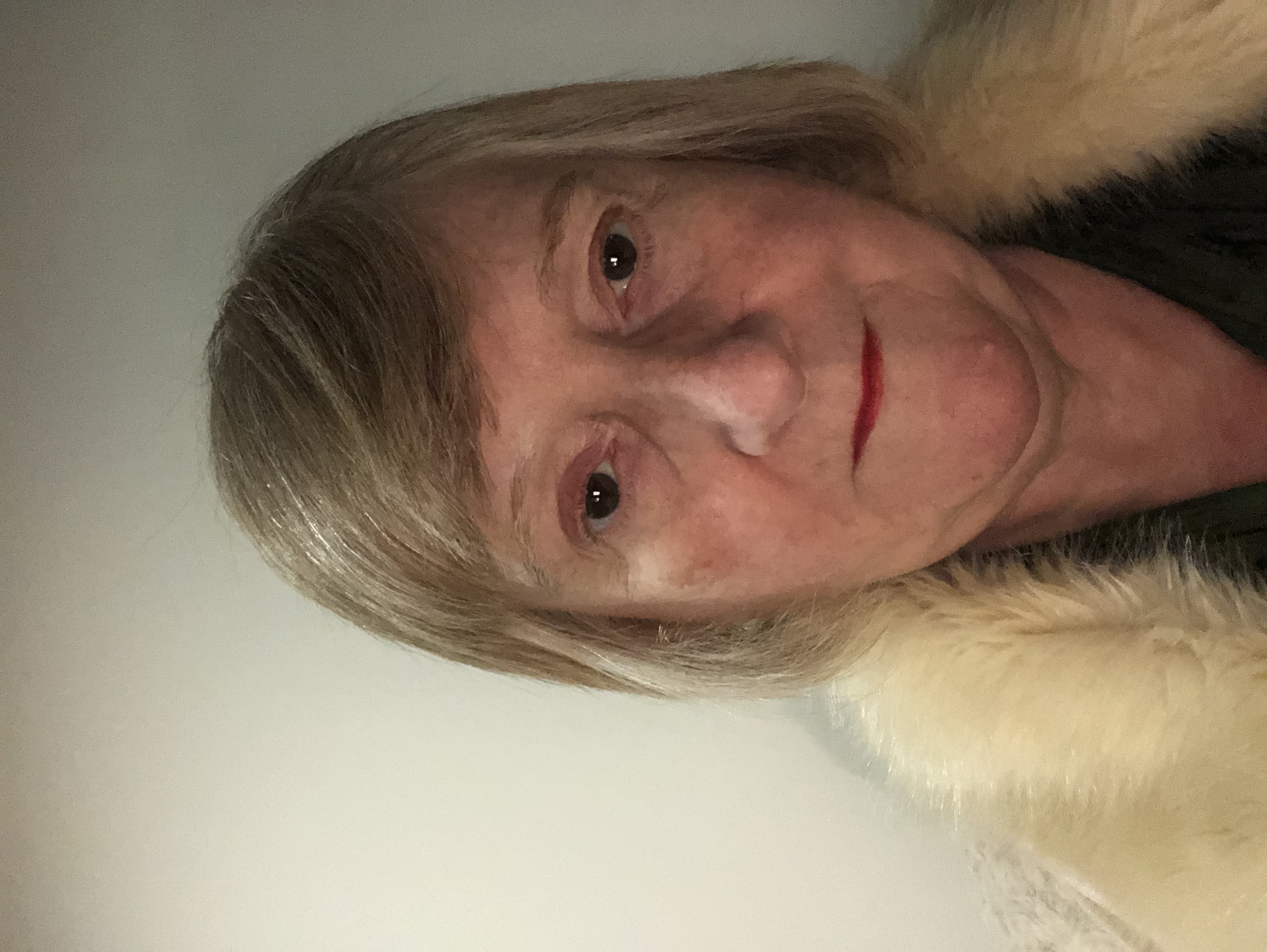
Marie Mulcahy is a NIMH-registered Medical Herbalist specialising in hormone health, running in-person clinics in Clitheroe and Darwen, Lancashire, with UK-wide online consultations.
2. Royal College of Obstetricians and Gynaecologists (RCOG). Managing premenstrual syndrome (PMS). https://www.rcog.org.uk/for-the-public/browse-our-patient-information/managing-premenstrual-syndrome-pms/
3. NICE Clinical Knowledge Summaries (CKS). Premenstrual syndrome. National Institute for Health and Care Excellence. https://cks.nice.org.uk
4. Mental Health Hub. Premenstrual dysphoric disorder (PMDD), referencing NICE and National Association for Premenstrual Syndromes (NAPS) guidance. https://mentalhealthinportsmouth.co.uk/self-help/types-of-mental-health-problems/pmdd/
5. NHS. Menopause — Symptoms. https://www.nhs.uk/conditions/menopause/symptoms/
6. NHS inform. Signs and symptoms of menopause. NHS Scotland. https://www.nhsinform.scot/healthy-living/womens-health/later-years-around-50-years-and-over/menopause-and-post-menopause-health/signs-and-symptoms-of-menopause/
This article is for general information and does not replace personalised medical advice. If your symptoms are significantly affecting your daily life, please speak with your GP or a qualified healthcare practitioner.
---
Marie Mulcahy is a NIMH-registered Medical Herbalist specialising in hormone health, running in-person clinics in Clitheroe and Darwen, Lancashire, with UK-wide online consultations.
FAQ'S
Comparison between GP and a Medical Herbalist
What is Herbal Medicine
Tell me more about conditions you work with
Anxiety Click on this condition here
Thyroid Click on this condition here
Menopause Click on this condition here
Women's Hormones Click on this condition here


